Cities
Vancouver: 22 Best Things to Do and Travel Tips
22 things to do in Vancouver with admission prices in CAD, getting around by SkyTrain and bus, the airport transfer and the best time to visit.
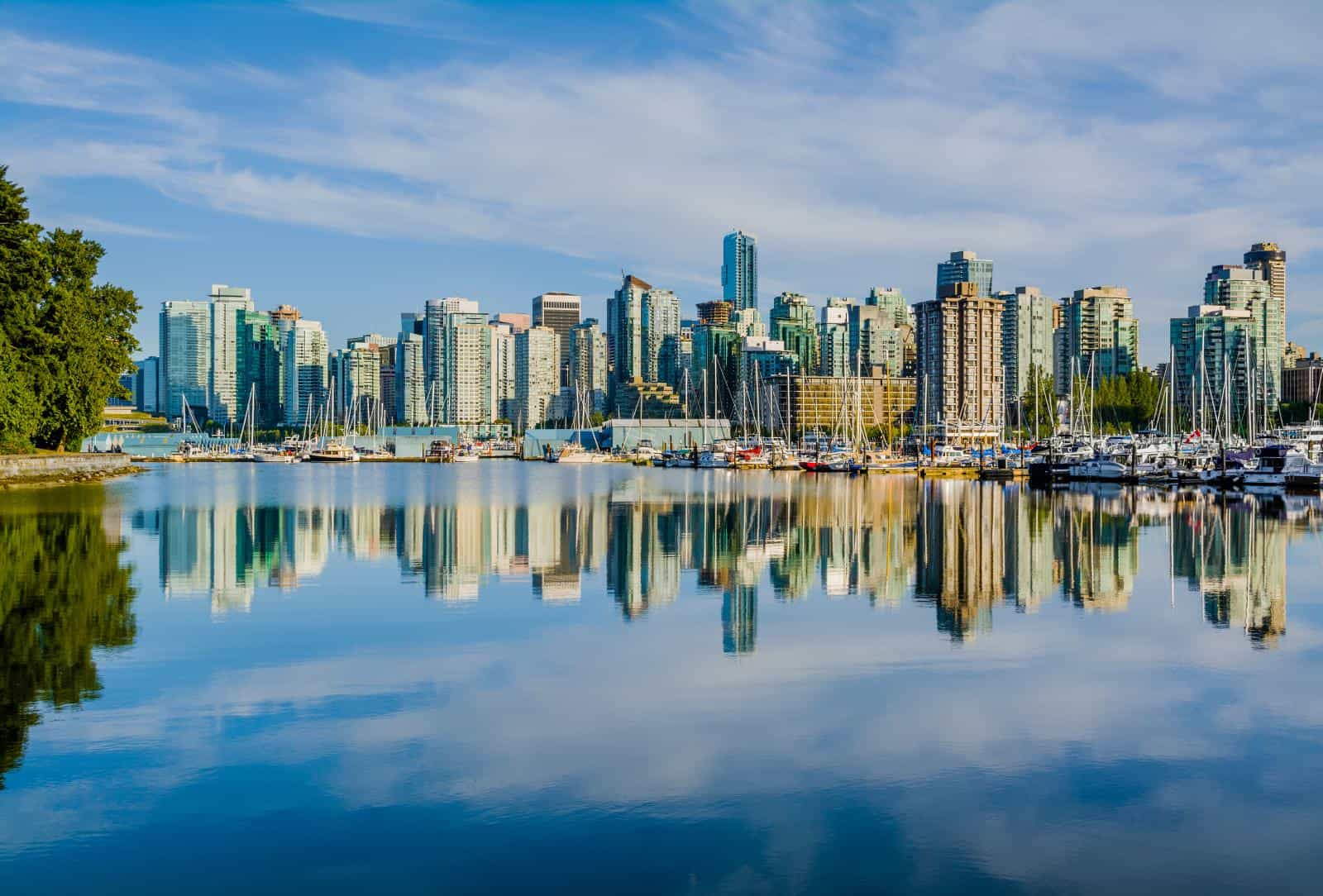
Vancouver has about 740,000 residents, and a little over three million people live in Metro Vancouver. The city sits on the Pacific coast of British Columbia, between Burrard Inlet to the north, the Fraser River to the south and the North Shore Mountains, which rise to 1,200 metres.
Here are the 14 most important places for a first visit and eight more destinations, each with its admission price and the nearest SkyTrain station or bus route. Prices are in Canadian dollars (CAD), as of October 2026.
Getting There and Getting Around
Vancouver International Airport (YVR) is on Sea Island in Richmond, about 15 kilometres south of downtown. Lufthansa and Air Canada fly direct from Frankfurt, and Condor does too in summer. In the summer season, Edelweiss flies direct from Zurich to Vancouver.
The Canada Line, part of the SkyTrain, runs into the city. The ride to the last stop, Waterfront, takes just under 30 minutes. If you board at the airport, you pay a 6.50 CAD surcharge (AddFare) on top of the regular fare. On weekdays before 6:30 pm, the ride downtown costs 11.60 CAD, and in the evening and on weekends it costs 10 CAD. You can pay at the fare gate with a credit card or your phone.
The TransLink network is made up of the SkyTrain, buses and the SeaBus ferry to North Vancouver. A one-zone trip costs 3.50 CAD if you pay by card, or 2.85 CAD with the reloadable Compass Card. The fare is valid for 90 minutes on all modes. Bus trips always count as one zone, as do all trips after 6:30 pm and on weekends. The DayPass costs 12.55 CAD. You can find current fares at translink.ca (opens in a new tab).
Best Time to Visit
Vancouver has one of the mildest climates in Canada. From June to September it is usually dry and warm, but rarely hot. In late July and early August, the Celebration of Light fireworks festival takes place at English Bay. In March and April, cherry trees bloom on many streets. From November to March it rains often, but snow rarely falls in the city. That is ski season on Grouse Mountain.
1. Stanley Park and the Seawall

Stanley Park covers 400 hectares and borders downtown directly. Much of it is coastal rainforest with Douglas fir, western red cedar and hemlock. First Nations totem poles stand at Brockton Point, and from Prospect Point you look out over the Lions Gate Bridge. The park is also home to the Vancouver Aquarium, Beaver Lake and several beaches. Since early 2026, trees damaged by pests have been cut down in the interior of the park, so some paths, such as Lees Trail and the trails around Beaver Lake, are closed at times.
The park is best known for the Seawall. This waterfront path runs about 9 kilometres around the peninsula. On foot it takes two to three hours, by bike about one hour. Walkers and cyclists have separate lanes. In total the Seawall is 28 kilometres long and runs from the Vancouver Convention Centre to the beaches at Spanish Banks. You can rent bikes on Denman Street at the park entrance. Admission is free. Bus 19 runs from downtown into the park.
2. Granville Island

The peninsula under the Granville Bridge was created from landfill in 1915 and was an industrial area for a long time. Since the 1970s, markets, theatres, studios and workshops have moved into the old buildings. At the Public Market, vendors sell fruit, vegetables, fish, cheese, bread and prepared food. It is open daily from 9 am to 6 pm. Next door is the Granville Island Brewery, one of the first microbreweries in Canada.
The nicest way to get there is on the small ferries run by Aquabus or False Creek Ferries, which leave from several docks around False Creek. You can also take bus 50 from downtown to just short of the island. Admission is free.
3. Gastown

Gastown is the oldest part of the city. In 1867, John Deighton, known as Gassy Jack, opened a saloon here, and a settlement grew up around it. In 1886 it burned down almost completely and was rebuilt in brick. Today the old warehouses on Water Street hold restaurants, bars, galleries and shops. A statue of Gassy Jack stands on Maple Tree Square.
The Steam Clock from 1977 stands at the corner of Water Street and Cambie Street. Every 15 minutes it plays a tune on its steam whistles. Since 2025 the hands have not always shown the right time because of a fault, but the whistles still work. Admission is free. SkyTrain: Waterfront.
GetYourGuide offers walking tours of Gastown, food tours, hop-on hop-off buses and boat trips.
4. Canada Place, Coal Harbour and Vancouver Lookout

Canada Place, with its roof of five white sails, was built for the Expo 86 world’s fair. Today cruise ships leave here for Alaska, and the building holds a hotel and the convention centre. From the promenade around the building you can watch the floatplanes take off and land. Coal Harbour starts to the west, with marinas, residential towers and the Seawall, which runs from here to Stanley Park. The walk takes about 30 minutes.
Two blocks away is the Harbour Centre. On its roof, 168 metres up, is the Vancouver Lookout observation deck, reached by a glass elevator. From there you can see across the whole city to the mountains. Prices and opening hours are on vancouverlookout.com (opens in a new tab). SkyTrain: Waterfront.
5. Capilano Suspension Bridge Park

In 1889, Scotsman George Grant Mackay had the first suspension bridge over the Capilano River built from hemp rope and cedar. Today’s bridge, hung on steel cables, is 137 metres long and hangs 70 metres above the river. The park also includes Treetops Adventure, seven smaller suspension bridges between old Douglas firs, and the Cliffwalk, a walkway that follows the cliff face above the canyon.
Admission is 76.95 CAD for adults and includes all areas. A free shuttle runs year round from Canada Place, and the ride takes about 20 minutes. By public transit, take the SeaBus to Lonsdale Quay and then bus 236.
6. Grouse Mountain

North Vancouver’s local mountain is 1,231 metres high. The Red Skyride aerial tramway or the Blue Grouse Gondola takes you to the top station at about 1,100 metres. Up there you will find a grizzly bear habitat, a lumberjack show, a chairlift to the summit and viewpoints over the city. In winter the mountain is a ski area with night skiing.
Mountain Admission for adults costs 89 CAD and includes the ride up and down. Fit visitors hike up the Grouse Grind. The trail is 2.5 kilometres long and climbs about 800 metres, mostly on steps. It is uphill only and closed in winter. To ride down, you need a Download Ticket for 20 CAD. To get there, take the SeaBus to Lonsdale Quay, then bus 236 to the base station.
7. Museum of Anthropology
The museum on the University of British Columbia campus shows art and everyday objects of the First Nations of the Northwest Coast. Arthur Erickson designed the building with its tall glass hall, and it opened in 1976. Totem poles of the Haida, Kwakwaka’wakw and other peoples stand in the Great Hall. The best-known work is the cedar sculpture The Raven and the First Men by Bill Reid.
Admission is 26 CAD for adults. It is open daily from 10 am to 5 pm, and until 9 pm on Thursdays. From October 15 to May 15 it is closed on Mondays. Take bus 99 or R4 to UBC Exchange, then walk about ten minutes.
8. Vancouver Aquarium
The aquarium in Stanley Park opened in 1956 and is the largest in Canada. It shows animals of the Pacific coast, such as sea otters, sea lions and jellyfish, plus an Amazon rainforest area.
Adult admission costs 41.95 to 57.95 CAD plus tax, depending on the day. Buying online in advance is cheapest. Bus 19 stops nearby.
9. Chinatown and Dr. Sun Yat-Sen Garden
Vancouver’s Chinatown took shape in the 1880s, when Chinese workers came to build the Canadian Pacific Railway. It is one of the largest in North America and has been a National Historic Site since 2011. On Pender Street and Keefer Street you will find bakeries, tea shops, herbal pharmacies and dim sum restaurants.
The Dr. Sun Yat-Sen Classical Chinese Garden was laid out in 1986 as the first full classical Chinese garden outside China, modelled on the gardens of Suzhou. Admission is 14 CAD. From November to April it is closed on Mondays. Next to it is a free public park in the same style. SkyTrain: Stadium-Chinatown.
10. English Bay and the Beaches
English Bay Beach, on the edge of the West End, is the beach closest to downtown. In summer people swim and play volleyball here. On New Year’s Day, thousands jump into the cold water for the Polar Bear Swim. Further toward Stanley Park are Second Beach, with a heated outdoor pool, and Third Beach.
On the south side of False Creek come Kitsilano Beach, with a saltwater outdoor pool, then Jericho Beach, Locarno Beach and Spanish Banks. At low tide you can walk far out across the sandbars at Spanish Banks. Vanier Park, between Granville Island and Kitsilano, is home to the Museum of Vancouver, the Maritime Museum and the planetarium. All beaches are free. Bus 5 runs to English Bay along Robson Street.
11. Queen Elizabeth Park and Bloedel Conservatory
The park sits on Little Mountain, the highest point in the city. Gardens were planted in two former quarries. From the plaza at the top you can see over downtown to the North Shore Mountains. The park is free.
Under the dome of the Bloedel Conservatory, which opened in 1969, tropical plants grow while parrots and other birds fly freely between them. Admission is 9.50 CAD plus tax, or 1 CAD less online. The nearest SkyTrain station is King Edward on the Canada Line, about a 15 minute walk uphill.
12. VanDusen Botanical Garden
The botanical garden opened in 1975 on a former golf course and covers 22 hectares. It shows plants from around the world in themed areas, along with lakes, a rhododendron walk and a hedge maze.
Admission is 15.81 CAD from April to October and 11.19 CAD from November to March, plus tax. Bus 17 stops at the entrance on Oak Street.
13. Science World
The geodesic dome at the end of False Creek was built for Expo 86. Since 1989 it has housed a science centre with hands-on experiments, shows and exhibits on nature and technology. Plan on about two hours.
Admission is 37.50 CAD for adults. It is open daily from 10 am to 5 pm. SkyTrain: Main Street-Science World.
14. Vancouver Art Gallery
The largest art museum in Western Canada is in the former courthouse on Robson Street. One focus is the work of Emily Carr, who painted the forests and villages of the coast. There are also changing exhibitions.
Admission is 35 CAD, or 29 CAD for British Columbia residents. On the first Friday of the month, admission is free from 4 pm to 8 pm. SkyTrain: Vancouver City Centre.
More Things to Do
15. Vancouver Lookout
The observation deck on the Harbour Centre is 168 metres above the street, and a glass elevator on the outside of the building takes you up. At the top you see all around over downtown, the harbour and the North Shore Mountains. For prices and opening hours, see vancouverlookout.com (opens in a new tab). SkyTrain: Waterfront.
16. H. R. MacMillan Space Centre
The astronomy museum in Vanier Park opened in 1968 and has planetarium shows, demonstrations and an exhibit on space travel. Admission is 27.50 CAD plus tax. Take bus 2 or 32 and walk five minutes, or take False Creek Ferries to Vanier Park.
17. Vancouver Maritime Museum
The maritime museum is right next to the Space Centre. Its hall holds the St. Roch, a Royal Canadian Mounted Police schooner that from 1940 to 1942 became the first ship to sail the Northwest Passage from west to east. Admission is 22 CAD plus tax, and it is open Tuesday to Sunday from 10 am to 5 pm. Take bus 2 to Cornwall Avenue and Cypress Street, or False Creek Ferries to the museum dock.
18. Kitsilano Beach
This beach in the Kitsilano neighbourhood faces downtown from the south side of English Bay. Next to it is Kitsilano Pool, an outdoor pool with heated saltwater that opens only in summer. The beach and park are free. For pool prices and season dates, see vancouver.ca (opens in a new tab). Bus 2 or 22 to Cornwall Avenue.
19. Spanish Banks
The beaches west of Jericho Beach are named after a meeting between George Vancouver and Spanish navigators in 1792. At low tide the water pulls far back and exposes wide sandbars, with views of downtown and the mountains. Part of the western section is a designated dog beach. Admission is free. The easiest way to get there is by bike along the waterfront path from Kitsilano.
20. Lynn Canyon Park
This park in North Vancouver has its own suspension bridge, built in 1912 and hanging 50 metres above Lynn Creek. It is shorter than the Capilano Suspension Bridge but costs nothing. Hiking trails lead through the rainforest to waterfalls and the Twin Falls Bridge. Take the SeaBus to Lonsdale Quay and continue by bus toward Lynn Valley.
21. Deep Cove
This community in North Vancouver is on Indian Arm, a fjord that branches north off Burrard Inlet. You can rent kayaks and stand-up paddleboards here. From the village, the Baden Powell Trail leads to the Quarry Rock viewpoint: 3.8 kilometres return, 1.5 to 2 hours, free and open year round. The trail is easy to moderate, with stairs, wooden bridges and roots. Dogs are allowed on a leash. Bus 212 runs from Phibbs Exchange in North Vancouver to Deep Cove.
22. Lighthouse Park
This 75 hectare park in West Vancouver protects a remnant of old-growth coastal rainforest. There has been a light at Point Atkinson since the 1870s, and today’s lighthouse is a National Historic Site. Short trails, some of them steep, lead over granite rocks to the water. Admission is free. Bus 250 runs from downtown to Marine Drive at Beacon Lane, a few minutes’ walk away.
Overview: Admission and Getting There
| Attraction | Admission (adults) | Stop/how to get there |
|---|---|---|
| Stanley Park and Seawall | free | Bus 19 |
| Granville Island | free | Bus 50, ferry across False Creek |
| Gastown | free | Waterfront |
| Canada Place and Coal Harbour | free | Waterfront |
| Vancouver Lookout | see vancouverlookout.com | Waterfront |
| Capilano Suspension Bridge Park | 76.95 CAD | Free shuttle from Canada Place, bus 236 |
| Grouse Mountain | 89 CAD | SeaBus, then bus 236 |
| Museum of Anthropology | 26 CAD | Bus 99 or R4 to UBC Exchange |
| Vancouver Aquarium | 41.95 to 57.95 CAD | Bus 19 |
| Dr. Sun Yat-Sen Garden | 14 CAD | Stadium-Chinatown |
| English Bay and beaches | free | Bus 5 |
| Bloedel Conservatory | 9.50 CAD | King Edward |
| VanDusen Botanical Garden | 11.19 to 15.81 CAD | Bus 17 |
| Science World | 37.50 CAD | Main Street-Science World |
| Vancouver Art Gallery | 35 CAD | Vancouver City Centre |
| H. R. MacMillan Space Centre | 27.50 CAD | Bus 2 or 32, False Creek Ferries |
| Vancouver Maritime Museum | 22 CAD | Bus 2, False Creek Ferries |
| Kitsilano Beach | free | Bus 2 or 22 |
| Spanish Banks | free | Bike from Kitsilano |
| Lynn Canyon Park | free | SeaBus, then bus toward Lynn Valley |
| Deep Cove | free | Bus 212 from Phibbs Exchange |
| Lighthouse Park | free | Bus 250 |
Where to Stay in Vancouver
Three areas work well for a first visit. Downtown and Coal Harbour have most of the big hotels, close to Canada Place, Gastown and the SkyTrain. The West End, between Robson Street and English Bay, is a residential neighbourhood with smaller hotels, cafés and short walks to the beach and Stanley Park. In Yaletown on False Creek, you stay among converted warehouses with restaurants, and the Canada Line stops right in the neighbourhood.
You can find hotels in all three areas on Booking.com.
Frequently Asked Questions
How many days do you need for Vancouver?
Two full days are enough for Stanley Park, Granville Island, Gastown and one museum. With North Vancouver, meaning Capilano and Grouse Mountain, three to four days work well.
How do you get from the airport to downtown?
Take the Canada Line to Waterfront, which takes just under 30 minutes. The fare is 11.60 CAD on weekdays during the day and 10 CAD in the evening and on weekends, including the airport surcharge.
Do you need a car in Vancouver?
No. The SkyTrain, buses, SeaBus and the small False Creek ferries reach every attraction in this article. A rental car is worth it for trips up the Sea to Sky Highway to Whistler, a drive of about two hours.
Is there a free alternative to the Capilano Suspension Bridge?
Yes, the suspension bridge in Lynn Canyon Park in North Vancouver. It is shorter and lower but free. There are hiking trails around the canyon.

Comments
No comments yet. Questions about this article are welcome.
Thank you. Your comment will appear once we have checked it.