Wildlife & Nature
Where to See the Northern Lights in Canada
Where and when to see the aurora in Canada: Whitehorse, Yellowknife, Churchill and northern BC and Alberta, plus KP index, moon, forecasts and camera settings.
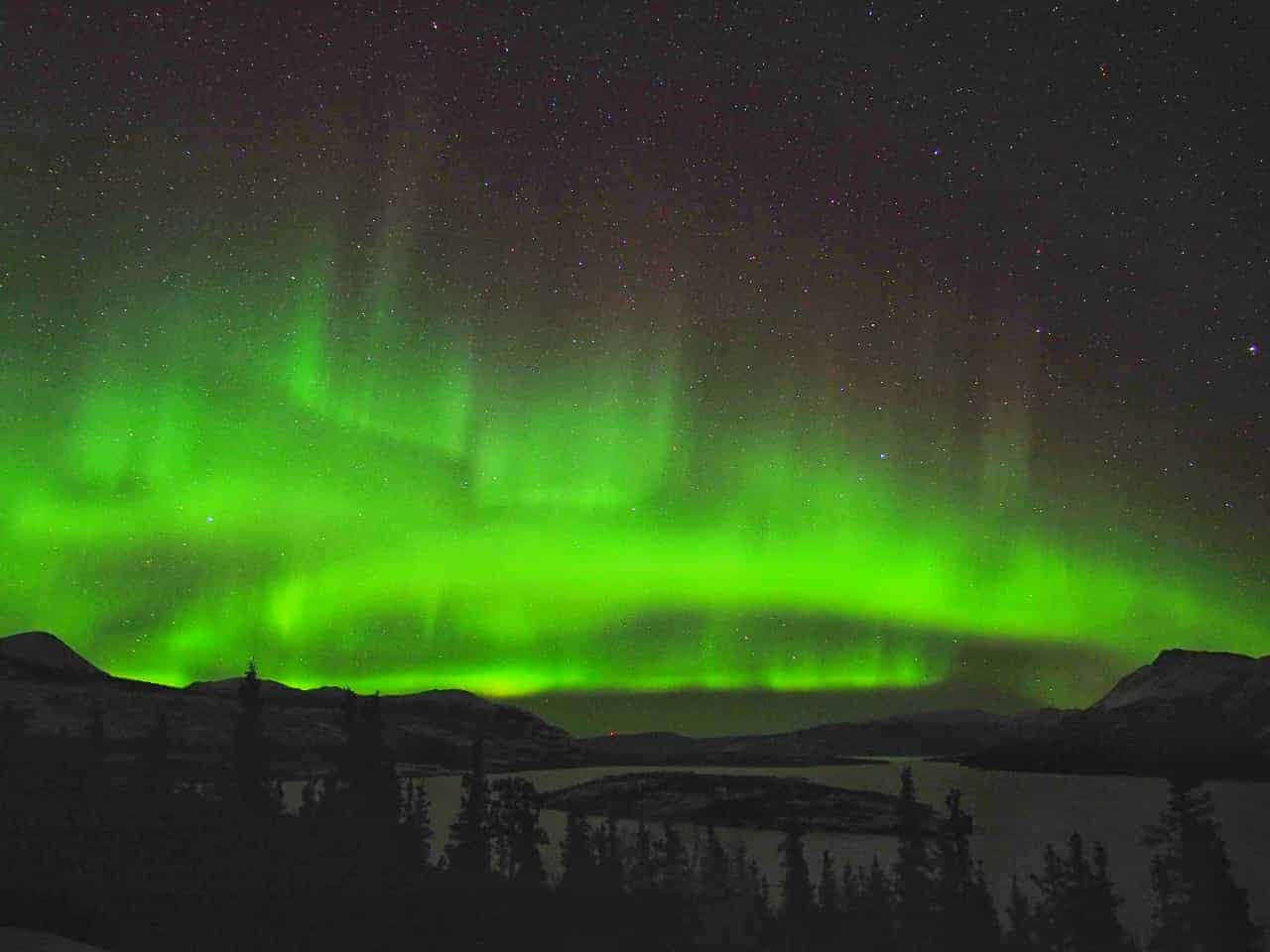
The northern lights, or aurora borealis, form when charged particles from the sun hit gases in the upper atmosphere, about 100 kilometres and more above the ground. Most of the light is green. At the highest altitudes it turns red, and on strong nights the lower edge glows pink or purple. The lights gather in a ring around the magnetic north pole called the auroral oval. Much of northern Canada sits right under this oval, which is why Canada is one of the best countries in the world for aurora viewing.
The closer you get to the oval, the better your odds. In the Yukon and the Northwest Territories, a quiet night with low solar activity can still bring a good show. In southern Canada you need a strong geomagnetic storm.
Below are the best regions, the right season, how the moon and the KP index affect your chances, which forecasts to watch and how to photograph what you see.
The Best Regions for the Northern Lights in Canada

Yukon: Whitehorse and the Southern Lakes
The Yukon covers 482,000 square kilometres and has fewer than 50,000 residents, most of them in Whitehorse. Drive 20 minutes out of town and the sky is dark. That makes the territory one of the easiest places to see the aurora on a short trip.
Whitehorse has daily flights from Vancouver, Calgary and Edmonton, and the airport is about 10 minutes from downtown. In season, tour operators pick guests up at downtown hotels each evening and drive them to viewing sites outside the city. If you rent a car, the lakes south of Whitehorse and the area around Haines Junction give you wide views to the north. Travel Yukon recommends at least three nights to give the weather and the sun a fair chance.
The aurora season in the Yukon runs from mid-August to mid-April. In late August and September the lakes are still open and the birch and aspen turn yellow during the day. From December to February the nights are longest, and temperatures of minus 20 to minus 40 degrees Celsius are normal.
If you plan to drive in winter, read our guide to the Yukon highways first.
Northwest Territories: Yellowknife
Yellowknife calls itself the aurora capital of North America, and the numbers back it up. The city lies at 62.45 degrees north, right under the auroral oval. The Northwest Territories tourism board counts up to 240 nights of aurora activity per year. Because Yellowknife sits on a flat plateau with many lakes, the weather is often clear and stable in winter.
There are two seasons: mid-August to the end of September, when you can watch the lights reflected in open lakes, and mid-November to early April. In between, from October to mid-November, the lakes freeze and the sky is often cloudy.
Most tours leave from downtown hotels and drive out along the Ingraham Trail to heated cabins or tipis by the lakes. Yellowknife has direct flights from Calgary, Edmonton and Vancouver.
Manitoba: Churchill
Churchill on Hudson Bay is best known for polar bears and beluga whales, but it also lies under the auroral oval. Travel Manitoba counts more than 300 nights of aurora activity per year and names February and March as the best months, when the nights are long and clear. The Churchill Northern Studies Centre, about 30 minutes from town, switches off its building lights during displays and offers viewing from a heated dome and an outdoor deck.
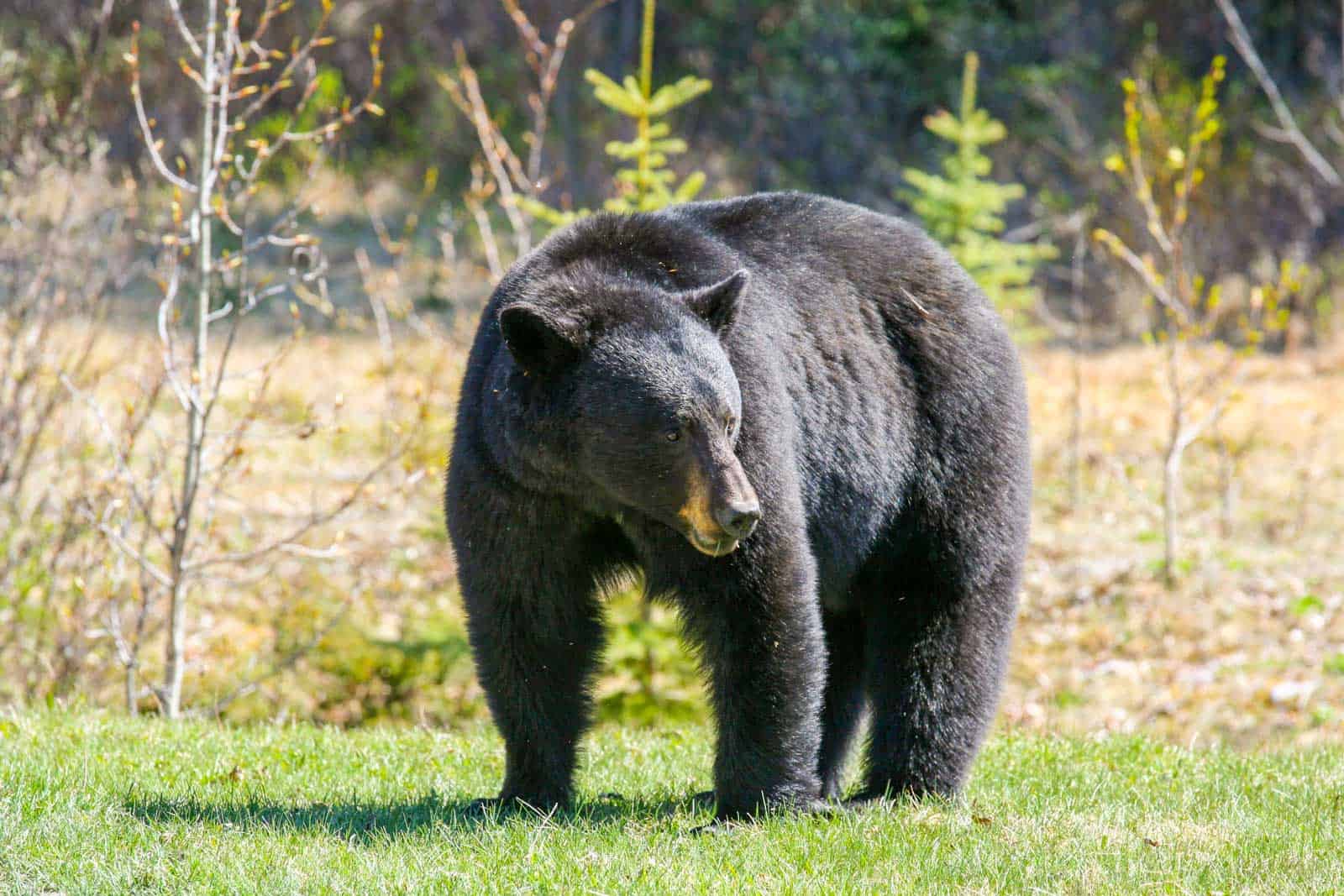
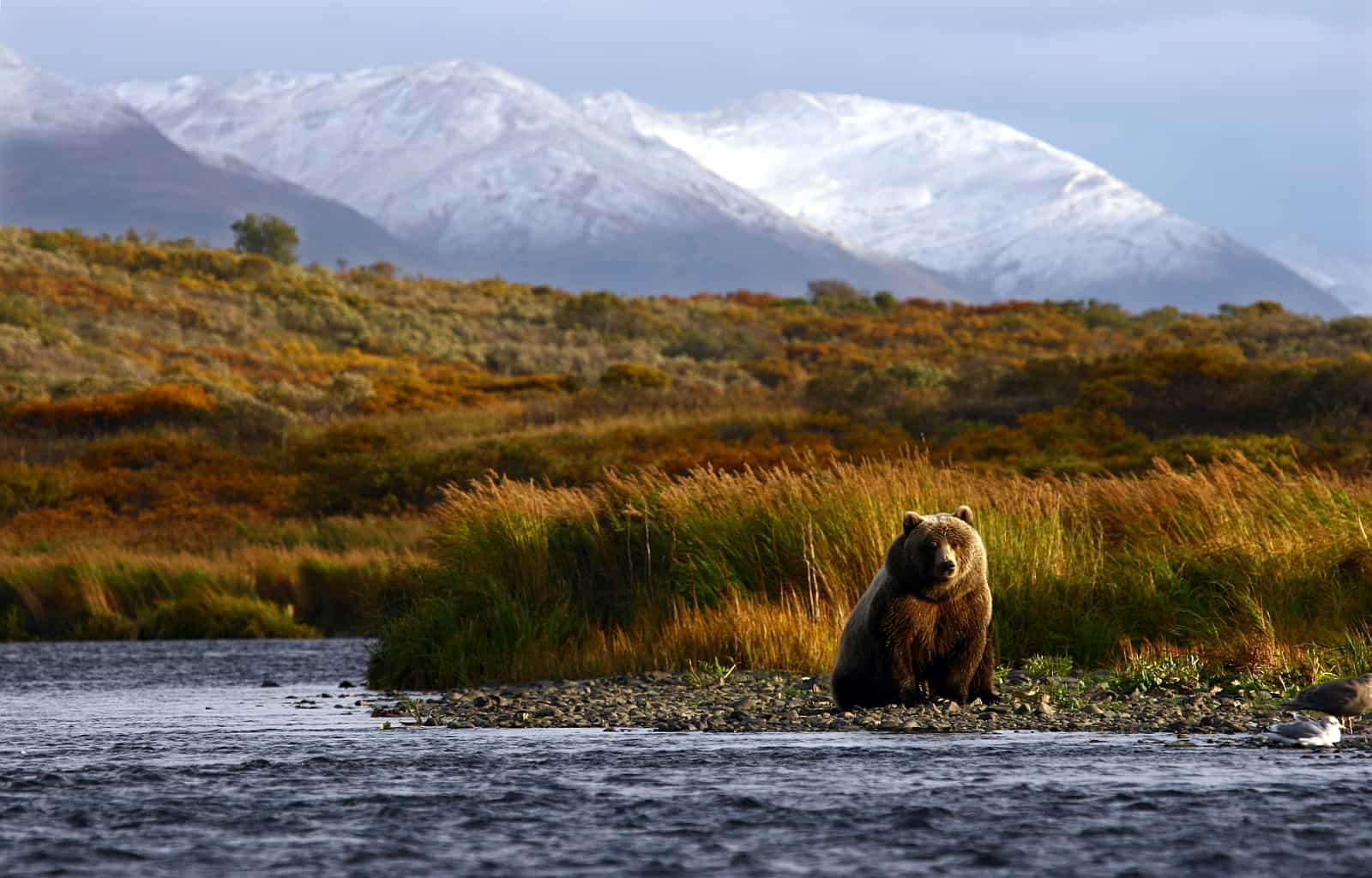
Churchill has no road connection. You get there by plane from Winnipeg or by VIA Rail. In February and March, minus 30 degrees Celsius is common. In late October and November, polar bear season, you can see bears by day and the aurora by night if the sky is clear. Read our guide to black bears, grizzlies and polar bears before you go.
Northern British Columbia and Alberta
You do not have to fly to the territories. Northern BC and northern Alberta also see the lights often, though not as reliably as Whitehorse or Yellowknife.
In northeastern BC, Fort Nelson lies at 58 degrees north, just south of the auroral oval. The local tourism office names Parker Lake and the provincial parks along the Alaska Highway, such as Muncho Lake, Stone Mountain and Liard River Hot Springs, as good viewing spots. The lights often appear first in the northeast.
In Alberta, the best place is Wood Buffalo National Park on the border with the Northwest Territories. It covers 44,741 square kilometres and has been the world’s largest dark-sky preserve since 2013. The main viewing site is Pine Lake campground, about 60 kilometres south of Fort Smith. Jasper National Park is also a dark-sky preserve and holds the Jasper Dark Sky Festival every October. The aurora shows up in Jasper during stronger storms. Elk Island National Park east of Edmonton and Sir Winston Churchill Provincial Park near Lac La Biche are good options close to Edmonton.

When to See the Northern Lights
The aurora is there all year, but you need darkness to see it. North of 60 degrees the sky never gets fully dark from May to July. The viewing season in the north therefore runs from late August to mid-April.
Each part of the season has its own character:
- Late August and September: mild nights, often above freezing, open lakes for reflections and fall colours. The nights are shorter, so the lights usually appear after 11 pm.
- October and November: more cloud in many northern regions, and the lakes freeze. Still worth a try in the Yukon.
- December to February: the longest nights and very cold, dry air. Dress for minus 30 degrees Celsius.
- March and early April: long nights, more daylight for activities and milder temperatures. Many photographers prefer March.
Most displays happen between 10 pm and 2 am, with the strongest activity often around midnight. Strong storms can start in the early evening and last until dawn.
The sun follows an 11-year activity cycle. According to NASA and NOAA, the current cycle reached its maximum around October 2024. Activity is now declining slowly, but the declining years often bring some of the strongest storms. In the far north this matters less, since you see the lights there even when the sun is quiet.
The Moon
A full moon brightens the sky and washes out faint aurora. Strong displays are still easy to see under a full moon, and moonlight lights up snow and mountains for photos. For the best chance with faint and medium activity, plan your trip in the week around the new moon. Check a moon calendar before you book flights.
What the KP Index Tells You
The KP index measures disturbance of the Earth’s magnetic field on a scale from 0 to 9. Many aurora apps show it, and it is easy to misread.
- KP 0 to 2: quiet. In Yellowknife, Whitehorse and Churchill you often still see the lights, because these places sit under the oval.
- KP 3 to 4: active. Good displays in the north, and sometimes visible in northern BC and Alberta.
- KP 5 and higher: a geomagnetic storm (G1 to G5 on NOAA’s scale). The aurora can reach southern Canada and the northern United States. In the far north, strong storms can push the oval south, so the brightest part may be on your southern horizon.
KP is a global average over three hours. Local conditions and short bursts of activity can differ a lot. Cloud cover is the most important factor of all: with a thick cloud layer, even KP 7 brings nothing.
Forecast Sources
Use several sources and check them during the day and again in the evening.
- NOAA Space Weather Prediction Center (opens in a new tab): the 30-minute aurora forecast map shows where the oval is expected in the next half hour. The SWPC also publishes a three-day KP forecast.
- Space Weather Canada (opens in a new tab): the Canadian Space Weather Forecast Centre, part of Natural Resources Canada, forecasts geomagnetic activity for the polar cap, auroral and subauroral zones of Canada up to two days ahead and updates every 15 minutes.
- AuroraWatch (opens in a new tab): run by the University of Alberta, it uses magnetometer data and sends free email alerts. Yellow alerts mean a probability of about 50 percent, red alerts about 70 percent or more.
- Weather forecast: Environment Canada’s cloud forecasts are just as important as space weather. Clear sky beats a high KP.
How to Photograph the Northern Lights

Equipment
You need long exposures that you cannot hold by hand, so a solid tripod is the most important piece of gear. It should stand firmly on snow and uneven ground. For the camera, a model where you can set ISO, aperture, shutter speed and focus manually is enough. A fast wide-angle lens with a focal length of about 14 to 24 mm (full frame) and an aperture of f/1.4 to f/2.8 lets in the most light and fits a large part of the sky into the frame.
Cold drains batteries fast. Bring at least two spare batteries and keep them in an inside pocket close to your body. A headlamp with a red light setting keeps your night vision and doesn’t spoil other people’s photos.
Settings
Set the camera up indoors before you go out. In the dark with gloves on, you won’t want to look for menu items.
- Mode: manual (M), autofocus off.
- Focus: manually to infinity. Many lenses focus slightly past the infinity mark, so test on a distant light or a bright star and mark the right spot with tape.
- Aperture: wide open, f/1.4 to f/2.8.
- ISO: 1600 to 3200 as a starting point.
- Shutter speed: 5 to 20 seconds. Fast-moving aurora needs short times, around 2 to 5 seconds, or the structure blurs. Faint, slow aurora can take 15 to 20 seconds. Keep it under about 25 seconds with a wide-angle lens, or the stars turn into short lines.
- White balance: around 3,500 to 4,000 Kelvin, or shoot in RAW and adjust later.
- Self-timer or remote release: so pressing the button doesn’t shake the camera.
Check the first shot on the display and adjust. If the image is too dark, raise ISO or exposure time. If it is noisy, lower the ISO and open the aperture. Turn the display brightness down so you don’t blind yourself.
Phones
Recent iPhone, Google Pixel and Samsung models have night modes that take good aurora photos, especially on a small tripod. Turn the flash off, prop the phone up and hold still for the full exposure. For strong displays the results can be surprisingly good. A dedicated camera still gives you more control and less noise.
Keep Warm

Aurora watching means standing still in the cold for hours. Dress in layers: thermal base layer, fleece and an insulated parka and pants. Wear warm winter boots rated for minus 40 degrees, a hat, a neck warmer and thin gloves under mittens so you can work the camera. Many Yukon and NWT tour operators rent out parkas and boots. When you bring the camera back indoors, put it in a closed bag first so condensation doesn’t form inside the lens.
Tips from Our Trips
- Plan at least three to four nights in one place. Weather is the factor you can’t control.
- Get away from town lights. Even a small community lights up the sky more than you would expect.
- Let your eyes adjust for 20 minutes and avoid looking at your phone.
- Look north first, but turn around now and then. During storms the lights can cover the whole sky.
- Faint aurora often looks grey-white to the eye. A test shot shows whether it is cloud or aurora.
Frequently asked questions
What is the best month to see the northern lights in Canada?
For Whitehorse and Yellowknife, September and the period from December to March give the best odds. March combines long, dark nights with milder temperatures. Churchill is best in February and March.
Can I see the northern lights in Banff?
Yes, but only during stronger geomagnetic storms, usually KP 5 or higher. Banff and Jasper lie too far south for regular displays. Jasper is a dark-sky preserve, which helps when a storm does happen. Our Banff National Park guide covers the rest of the trip.
How many nights do I need?
Plan at least three nights. In Yellowknife, three clear nights in season give you a very high chance. Four or five nights give you a buffer for cloudy weather.
What KP index do I need in the Yukon?
In Whitehorse, KP 1 to 3 is often enough for a visible aurora, because the city lies near the auroral oval. A clear sky is more important than a high KP value.
Does the aurora happen every night?
The aurora is active on most nights in the far north, but clouds, the moon and twilight decide whether you can see it. Bring patience and keep checking the forecasts during your stay.
Comments
No comments yet. Questions about this article are welcome.
Thank you. Your comment will appear once we have checked it.