Road Trips
Canada by RV: The Complete Guide
Renting an RV in Canada: licence and age rules, one-way fees, Parks Canada and provincial campground bookings, boondocking, dump stations, propane and seasons.
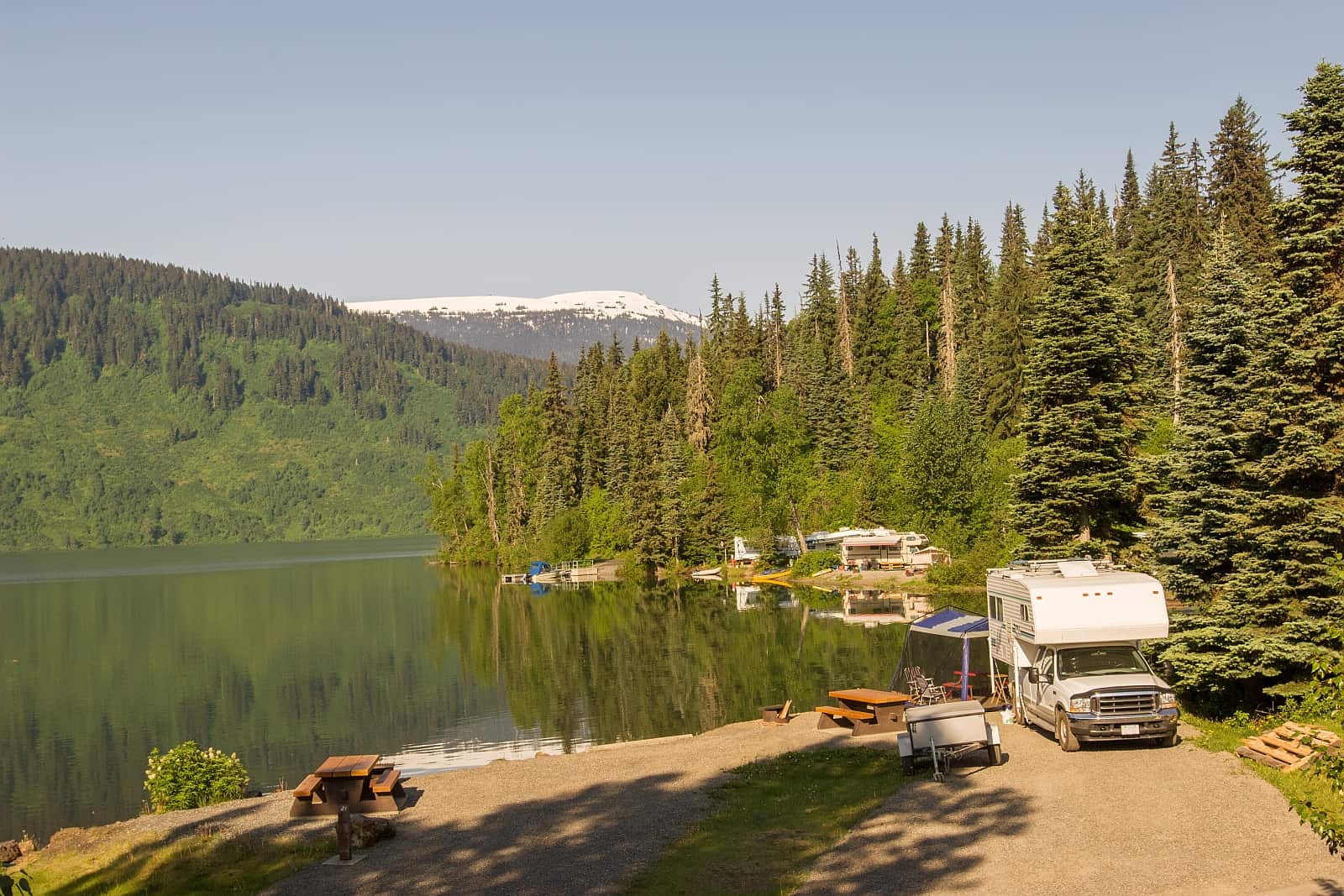
In western Canada, most highways run through mountains, forest and wide river valleys with very little traffic. An RV lets you stop wherever the view is good, cook your own meals and sleep next to a lake instead of in a motel parking lot. We have travelled this way many times, from the Rockies to the Yukon.
This guide covers what you need to know before you book: vehicle types, rental rules for drivers from Canada, the US and the UK, one-way fees, campground reservations, overnight parking rules, dump stations, propane and the best time to go. For a full budget, read our guide to what an RV trip in Canada costs. Prices are in Canadian dollars (CAD), as of October 2026.

Which RV to Rent
Canadian rental companies offer four main types of vehicle.
Class C motorhome. The most popular rental. It is built on a truck chassis, often a Ford E-450, with a bed over the cab. You can walk from the driver’s seat into the living area. Sizes run from about 6 to 9.5 metres (20 to 31 feet). The larger models sleep up to six people and suit families.
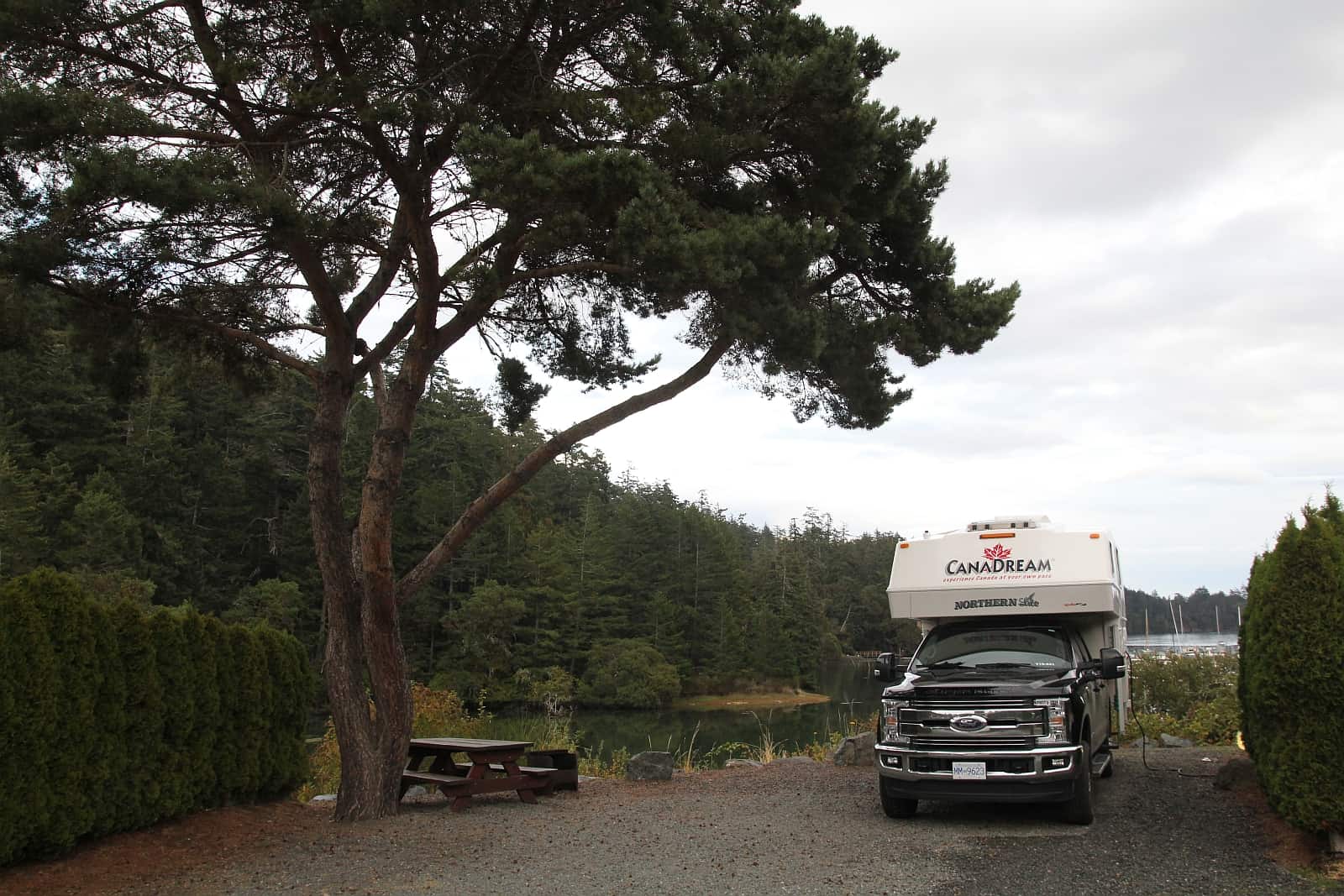
Truck camper. A camper unit that sits on the bed of a pickup truck. Many are four-wheel drive, they are shorter and easier to park, and they handle gravel roads and steep campground access better. The downside is that you can’t walk from the cab into the camper. Truck campers are a good choice for couples heading north to the Yukon.
Camper van. Compact, easy to drive in town and the most fuel-efficient. You give up space, and the bathroom is small or missing.
Class A motorhome. Built like a bus, with lots of living space. They are not offered by every company, cost the most to rent and use the most fuel. Some city centres and narrow mountain roads are not suited to them.
Fifth-wheel trailers, which many Canadians own, are generally not available for rent.
Rental Companies and Stations
The two largest Canadian rental companies are CanaDream (opens in a new tab) and Fraserway RV (opens in a new tab). Both have stations in Vancouver, Calgary and Whitehorse, and in central and eastern Canada as well. Smaller companies and peer-to-peer platforms add more options.
Pickup and return times are fixed, and Fraserway, for example, has an earlier cutoff for Sunday pickups in summer. Plan your flight and your first night around them. A hotel night after a long flight and a pickup the next day is the easiest way to start.
Licence and Age Rules
Licence. You need a valid driver’s licence from your home country, and you must show the original physical card at pickup. Fraserway does not accept digital licences. A standard car licence (Class 5 in BC and Alberta, a regular licence from a US state, or a full UK licence) is enough for the rental motorhomes on offer.
International Driving Permit. CanaDream and Fraserway strongly recommend an IDP only if your licence is not in English or French. A US or UK licence does not need one. An IDP is never valid without the original licence.
Visitors. In British Columbia, visitors may drive on a valid licence from home for up to six months from the date they last entered Canada.
Age. The minimum age is 21 at both CanaDream and Fraserway, and there is no upper age limit.
Credit card. The main driver needs a credit card (Visa, Mastercard or American Express) in their own name for the security deposit. Debit cards and cash are not accepted.
Additional drivers must be named on the rental agreement and show their licence at pickup.
One-Way Rentals
One-way trips save you from driving the same road twice, but they cost extra. Fraserway’s 2026 fees, for example:
| Route | One-way fee |
|---|---|
| Vancouver to Calgary or Edmonton | 650 CAD |
| Calgary or Edmonton to Vancouver | 1,200 CAD |
| Calgary to Edmonton | 400 CAD |
| Edmonton to Calgary | no fee |
| Edmonton to Whitehorse, or the reverse | 1,500 CAD |
| Halifax, Montréal or Toronto (between any two) | 1,200 CAD |
CanaDream offers one-ways with prior approval, but generally not into or out of Edmonton. Ask for the exact fee when you request a quote. The fee depends on the direction, because companies need to move vehicles where demand is.
Kilometres, Insurance and Road Restrictions
Most rentals charge by the kilometre. CanaDream includes 100 km per night and sells larger packages. Fraserway sells 500 km and 1,000 km packages or unlimited kilometres. Plan your route before booking, because unused prepaid kilometres are not refunded. Our cost guide has the current prices.
Basic insurance is included, but with a high deductible: 3,000 CAD at CanaDream and 7,500 CAD at Fraserway. Both offer cover that reduces it. Check what your credit card or home policy covers, since many do not include motorhomes.
Every company has a list of roads you may not drive or where insurance does not apply. Examples from 2026:
- CanaDream: the Dempster Highway is allowed only from mid-May to mid-September. The North Canol Road in the Yukon is prohibited. Travel to the Yukon needs a northern surcharge, which is included for Whitehorse pickups.
- Fraserway: Canol Road north of Ross River and the Aishihik Lake Road in the Yukon are not covered by its damage reduction plans. Logging roads and off-road driving are prohibited.
Read the list before you plan a route. Our guide to the Yukon highways explains which northern roads are paved and which are gravel.
Campgrounds

Canada has four kinds of campgrounds. In July and August, popular sites in the Rockies and on Vancouver Island are fully booked months ahead. Outside these months you can usually find a site on the day.
National parks (Parks Canada)
National park campgrounds lie in the middle of the scenery and have large, wooded sites. Most have unserviced sites, and a few have electrical or full hookups (water, sewer, power). You also need a park pass. From June 19 to September 7, 2026, admission was free and camping 25 percent cheaper under the Canada Strong Pass. Check parks.canada.ca for the rules in your travel year.
Reservations open on fixed launch dates in January and February, and Parks Canada uses an online queue on busy launch days. In 2026, Jasper opened on January 27 and Banff on February 12. Book at reservation.pc.gc.ca (opens in a new tab) or by phone at 1-877-737-3783. Have a few alternative dates ready, and be online when the queue opens at 8 am Mountain Time for the Rockies parks.
Sample 2026 fees in Banff: 34 CAD for an unserviced site with showers, 40 CAD with power and 47.25 CAD for full hookups at Tunnel Mountain. A fire permit costs extra. The online reservation fee is 11.50 CAD.
For planning in the Rockies, see our guides to Banff National Park and the Icefields Parkway.
Provincial and territorial parks
These campgrounds are simpler than national park sites, but often in beautiful places by lakes and rivers. Sites are well spaced, many with pit toilets, a picnic table and a fire ring.
- British Columbia: book at camping.bcparks.ca (opens in a new tab). BC Parks uses a three-month rolling window: you can book a site three months before your arrival date, and new dates open at 7 am Pacific Time each day. Fees run 5 to 51 CAD per night. Since May 15, 2026, visitors who live outside BC pay an extra 20 CAD per stay.
- Alberta: book at shop.albertaparks.ca (opens in a new tab). The basic campsite rate is 8 to 31 CAD, plus 8 CAD each for power, water and sewer. The reservation fee is 12 CAD. In Kananaskis Country you also need a Kananaskis Conservation Pass for your vehicle (15 CAD per day).
- Yukon: territorial campgrounds are open for camping from May 1 to September 30. A site costs 20 CAD per night paid in cash at the self-registration kiosk, or 18 CAD online. Half of the sites at Wolf Creek, Marsh Lake, Pine Lake, Kusawa Lake, Fox Lake and Tombstone Mountain can be reserved at yukon.goingtocamp.com. All other sites are first-come, first-served.
Private RV parks
Private campgrounds, often called RV parks, have full hookups, showers, laundry, Wi-Fi and sometimes a pool or store. Some are spacious and green. Others are little more than a paved parking lot near the highway. Parks near Vancouver, Banff, Jasper and other hotspots cost the most. Check reviews and photos before booking. A night at a full-service RV park every few days is useful to empty tanks, do laundry and charge everything.
Recreation sites and public land
British Columbia has hundreds of recreation sites on Crown land, managed by Recreation Sites and Trails BC. They are basic, with a pit toilet and fire ring at most, and many are free. Some charge a small fee. Find them at sitesandtrailsbc.ca (opens in a new tab). Access is often on gravel forest roads, which many rental companies prohibit. Check your rental terms.
Alberta requires a Public Lands Camping Pass for random camping on public land along the Eastern Slopes of the Rockies, from Grande Prairie to Waterton. It costs 20 CAD per person for three days or 30 CAD per year, for everyone 18 and older.
Overnight Parking and Boondocking
Free overnight parking, often called boondocking, is less common in Canada than many visitors expect.
- Rest areas: most post a time limit, and many prohibit overnight stays. Follow the signs.
- Store parking lots: some Walmart and other stores allow RVs overnight, many don’t. Often the mall owner or the city decides, not the store. Always ask at customer service first and park at the edge of the lot.
- “No Overnight Parking” signs: take them seriously. Towns enforce them, and fines can be high.
- Pullouts and roadsides: sleeping on the side of a highway is not a safe or legal plan in most places.
With a dense network of cheap or free campgrounds in the West and North, you rarely need to boondock. Plan to stay at a campground every night.
Dump Stations, Water and Propane
Dump stations (also called sani-dumps) are at most national park and many provincial park campgrounds, at private RV parks and at some gas stations. Some are free. Others charge a fee, from 3 to 10 CAD in Alberta provincial parks, for example. Fill your fresh water tank at the same stop, but only from taps marked as drinking water. Empty the black tank (toilet) first, then the grey tank (sinks and shower), which rinses the hose.
Propane runs the fridge, stove, furnace and water heater. Fraserway and CanaDream hand over the RV with a full tank. Check the gauge every day and refill before it drops below a quarter, especially in cold weather when the furnace runs at night. Many gas stations, RV parks and farm co-ops refill tanks. In Whitehorse, propane cost about 1.37 CAD per litre in August 2026. Turn off propane appliances while fuelling.
Power: without a hookup, the house battery runs lights and the water pump for a night or two. Most motorhomes have a generator. CanaDream charges for generator use in summer, and many campgrounds only allow generators during set hours.
When to Go
The main RV season runs from May to September. Most campgrounds in the Rockies and the North open in May and close between late September and mid-October. Yukon government campgrounds are open for camping from May 1 to September 30.
- May and June: fresh green, snow on the peaks, fewer people. Some higher campgrounds and roads open only in June. Lower rental rates.
- July and August: warmest weather and longest days, highest rental rates, fully booked campgrounds. Book the RV and the campgrounds early.
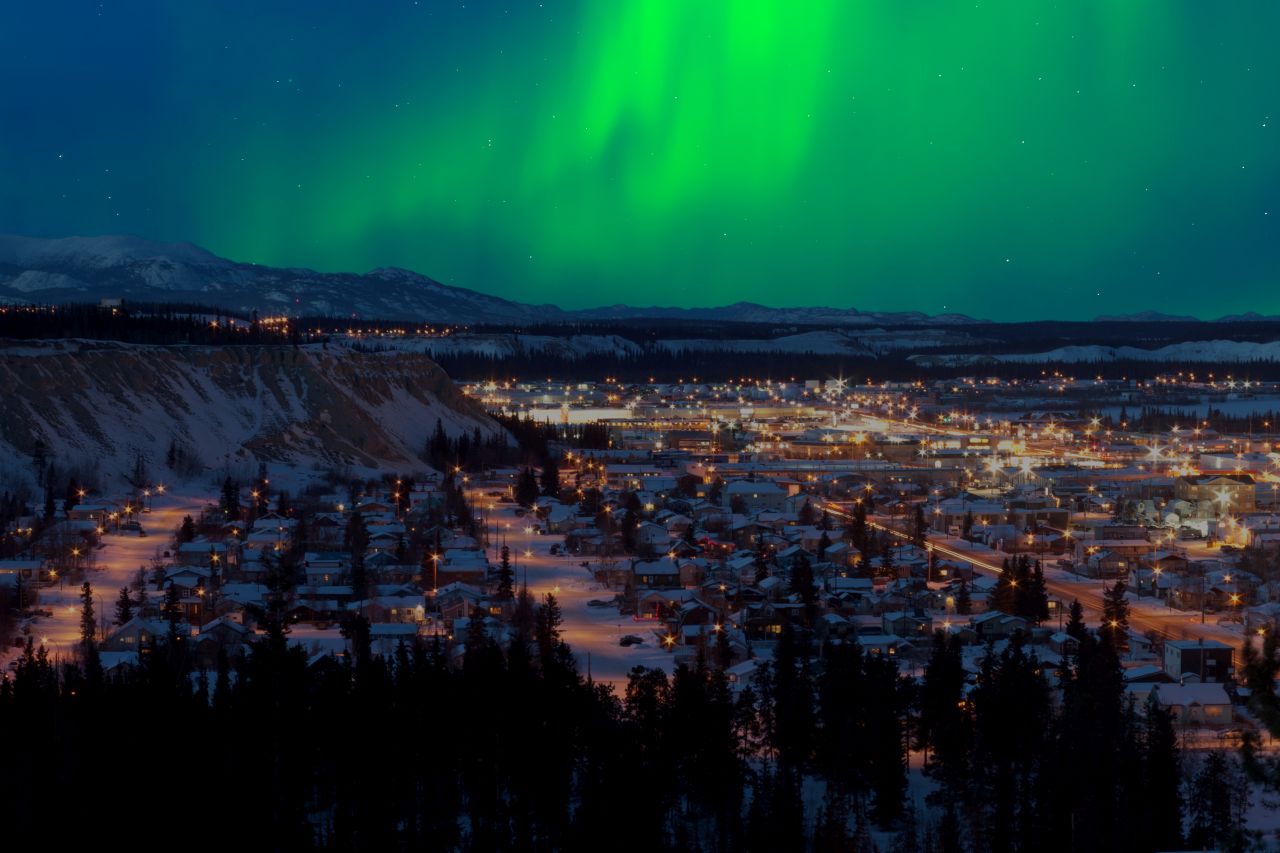
- September: our favourite month. Cooler nights, fall colours, fewer people and lower rates. In the North, the first northern lights appear.
- October to April: rental companies offer winterized RVs, often without running water. Many campgrounds are closed. Only for experienced drivers with winter experience.
In eastern Canada, early October brings the famous fall colours in Ontario, Québec and the Maritimes.
On the Road
- Speed limits are in kilometres per hour and are enforced. Typical limits are 100 to 110 km/h on highways, 80 to 90 km/h on rural roads and 50 km/h in town, but always follow the signs.
- School buses: when a school bus has its red lights flashing, traffic in both directions must stop, except on divided highways. Speed limits in school zones are strict and enforced.
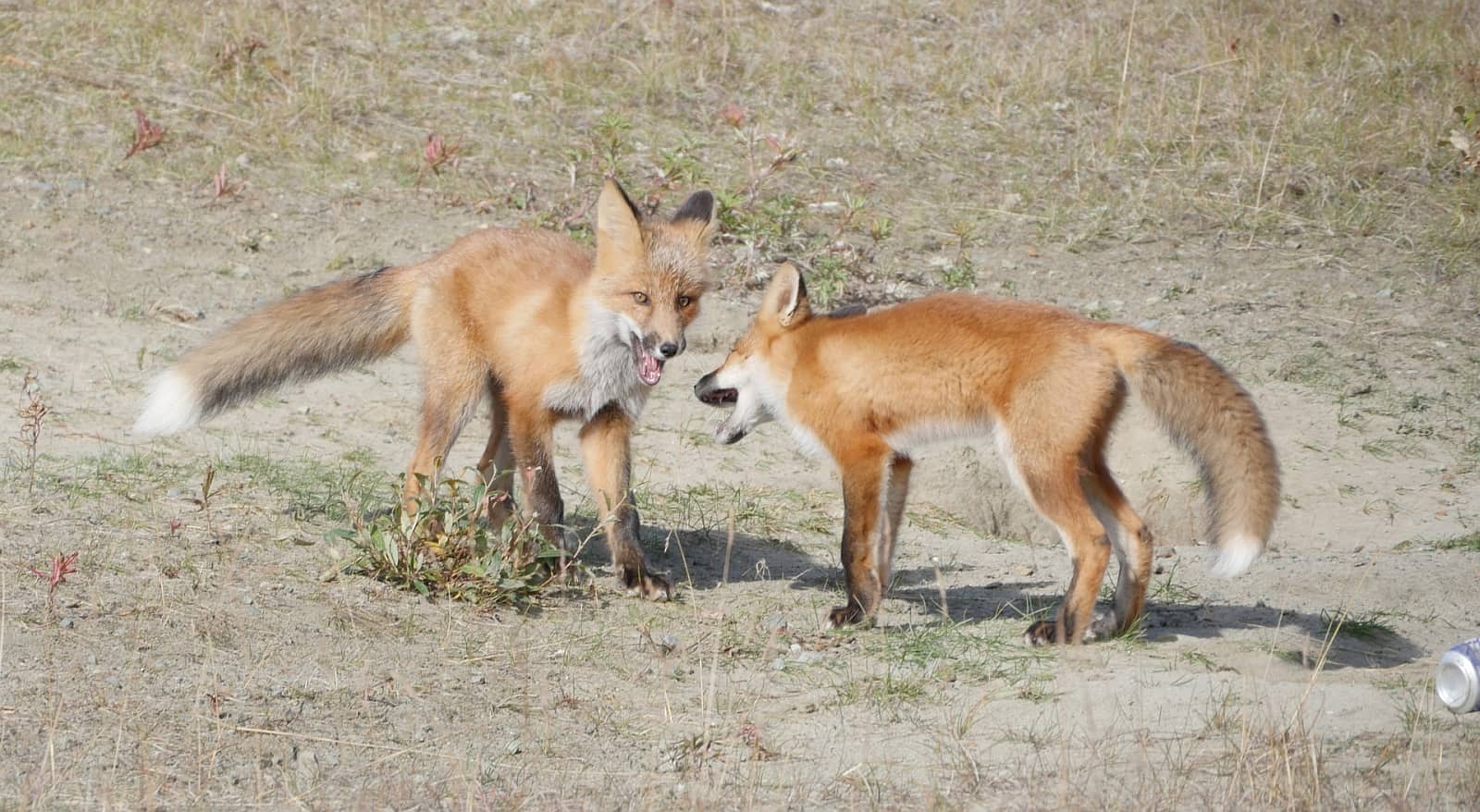
- Wildlife: expect bears, elk, bighorn sheep, moose and bison on or next to the road. Slow down and don’t stop in traffic. Our guide to bear safety in Canada explains how to watch bears from your vehicle.
- Fuel: in the North, gas stations can be 200 km or more apart and close early. Fill up whenever you can.
- Passing: on gravel roads, slow down when passing or meeting other vehicles, to avoid stone chips on the windshield.
- Height: know your RV’s height for bridges, gas station roofs and drive-throughs.
Tips from Our Trips
- Stay two nights in one place now and then. Setting up and packing up takes time, and you see more when you are not driving every day.
- Do your first big grocery shop near the rental station. Prices in small mountain and northern towns are higher.
- Buy bear spray after you arrive if you plan to hike. It is not allowed on planes.
- Book the first and last campground nights in advance, even in the shoulder season.
Frequently asked questions
Do I need a special licence to drive a rental RV in Canada?
No. A regular car licence from Canada, the US or the UK is enough for rental motorhomes. Bring the original card. An International Driving Permit is only needed if your licence is not in English or French.
Can I park my RV overnight at a Walmart in Canada?
At some stores, yes, at many, no. Ask at customer service first, and follow any “No Overnight Parking” signs. A campground is the safer plan.
When should I book an RV and campgrounds?
For July and August, book the RV as early as possible, ideally in the autumn before your trip. Parks Canada campgrounds open for booking in January and February, and BC Parks three months before your arrival date.
Can I drive a rental RV to the Yukon or Alaska?
Yes, with conditions. CanaDream requires you to request northern travel when booking and charges a northern surcharge, and some highways are excluded. Picking up in Whitehorse is often easier and saves you the long drive north.
What is the best month for an RV trip in Canada?
June and September. The weather is mild, campgrounds are less crowded and rental rates are lower than in July and August.
Comments
No comments yet. Questions about this article are welcome.
Thank you. Your comment will appear once we have checked it.