Wildlife & Nature
Black Bear, Grizzly or Polar Bear? How to Tell Them Apart
How to tell a black bear from a grizzly by hump, face, ears and claws, plus polar bears, spirit bears and grizzly-polar hybrids, with facts from Parks Canada.
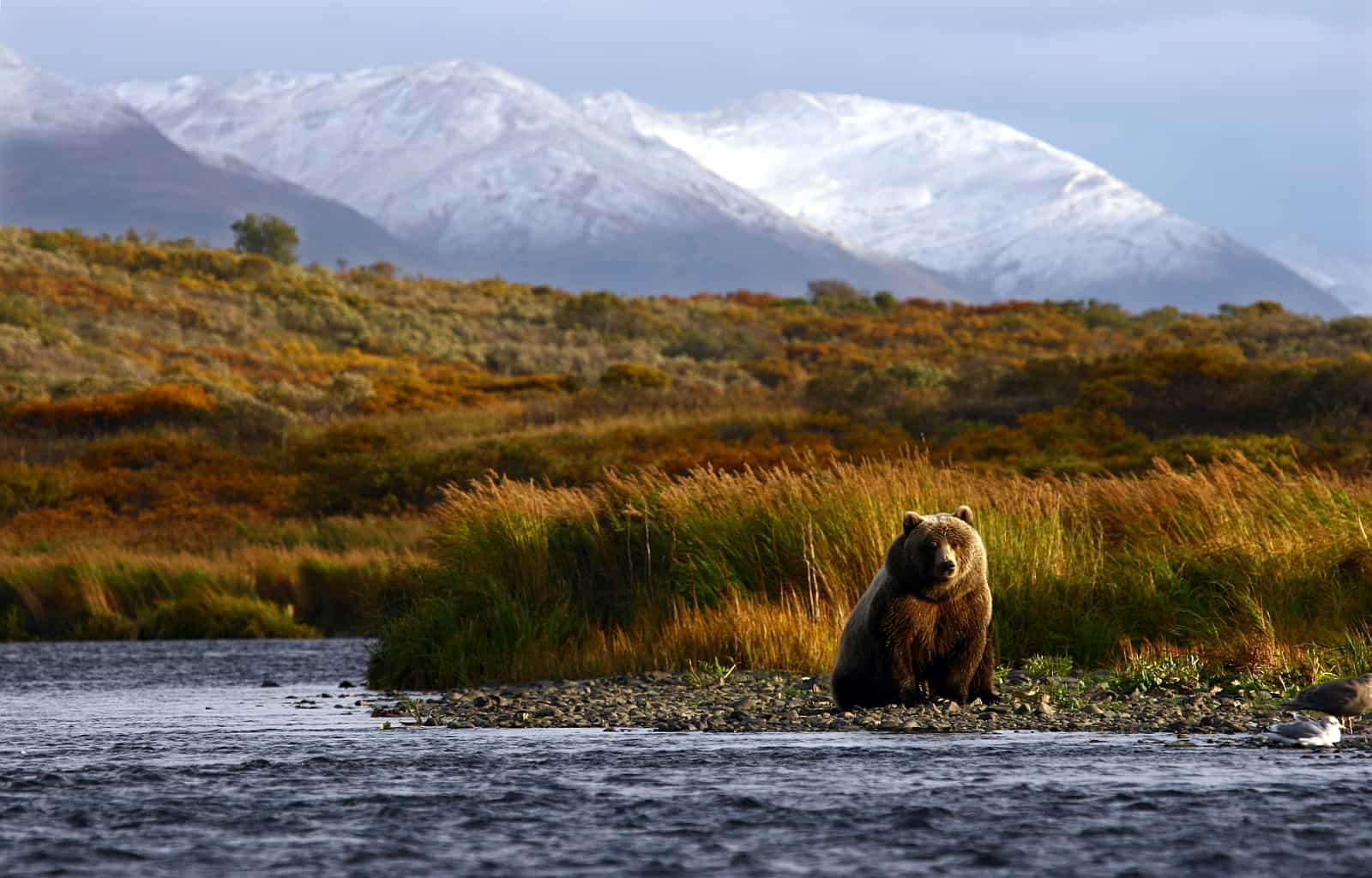
Canada is home to all three bear species of North America: the American black bear, the grizzly (a North American brown bear) and the polar bear. Black bears live in forests from Newfoundland to Vancouver Island. Grizzlies live in western Canada, from the Rockies to the Yukon and the Arctic coast. Polar bears live on the sea ice and coasts of the Arctic and Hudson Bay.
Knowing which bear is in front of you matters. Black bears and grizzlies overlap in much of the West, and the two can look surprisingly alike. Colour does not tell you which one it is. Body shape does.
The facts below come from Parks Canada, the Government of Manitoba and peer-reviewed research.
Black Bear or Grizzly: The Four Signs
Parks Canada uses four features to tell the two species apart. Look for at least two of them before you decide.
| Feature | Grizzly bear | Black bear |
|---|---|---|
| Shoulders | Prominent hump of muscle above the shoulders | No hump |
| Back line | Rump lower than the shoulders | Rump higher than the shoulders |
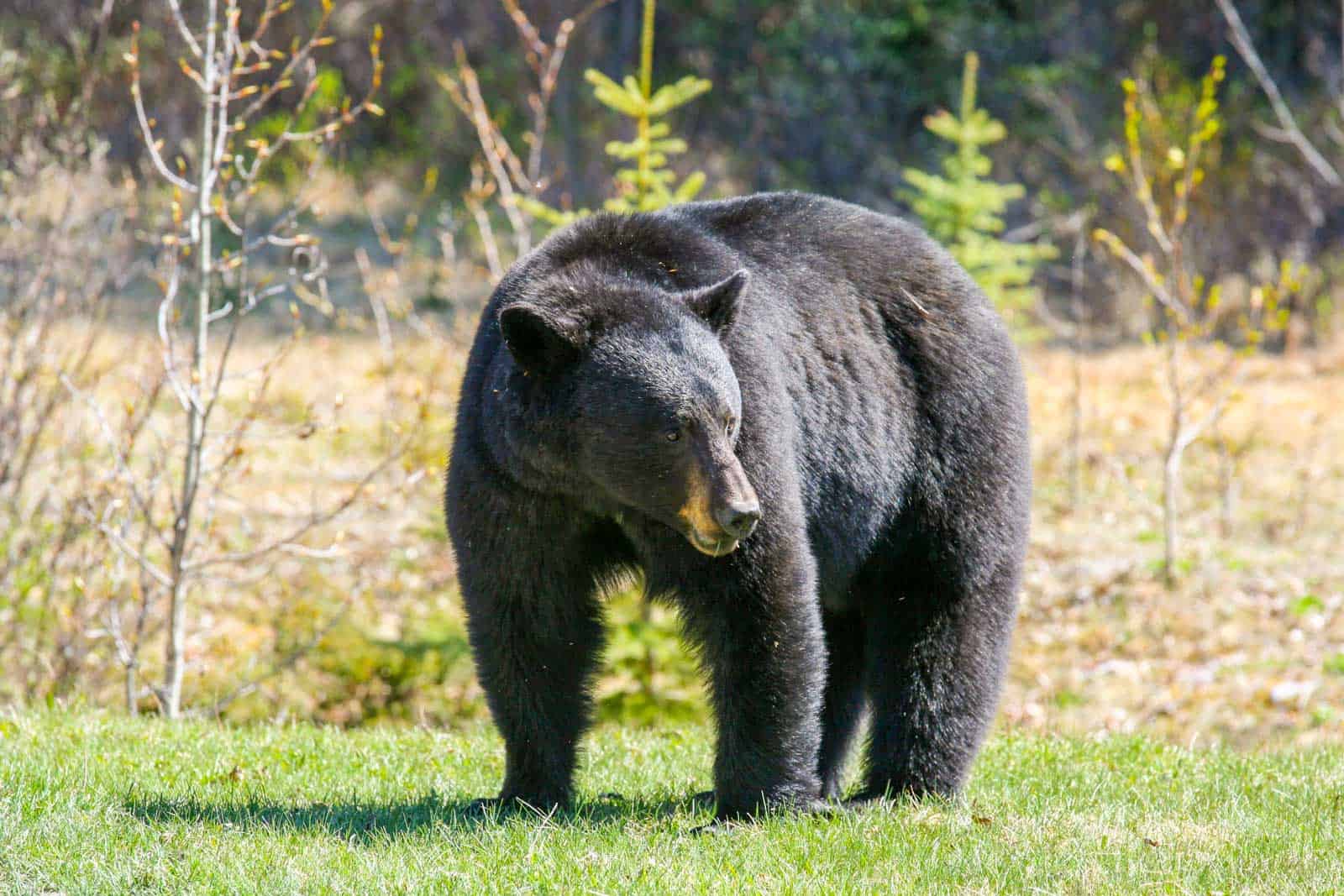
| Face | Large, round head with a dished (concave) face | Smaller head, straight line from forehead to nose |
| Ears | Short, round, set wide apart | Taller, pointier, more prominent |
| Claws | Long and slightly curved, 5 to 10 cm, for digging | Short, dark and curved, 3 to 4 cm, for climbing |
In tracks, grizzly claw marks show 5 cm or more in front of the toe pads. Black bear claw marks are often missing, and when they show they sit close to the toes.
The grizzly’s hump is the muscle that powers its digging. Grizzlies dig for roots, ground squirrels and insects, while black bears climb trees to escape danger or reach food.
The Black Bear
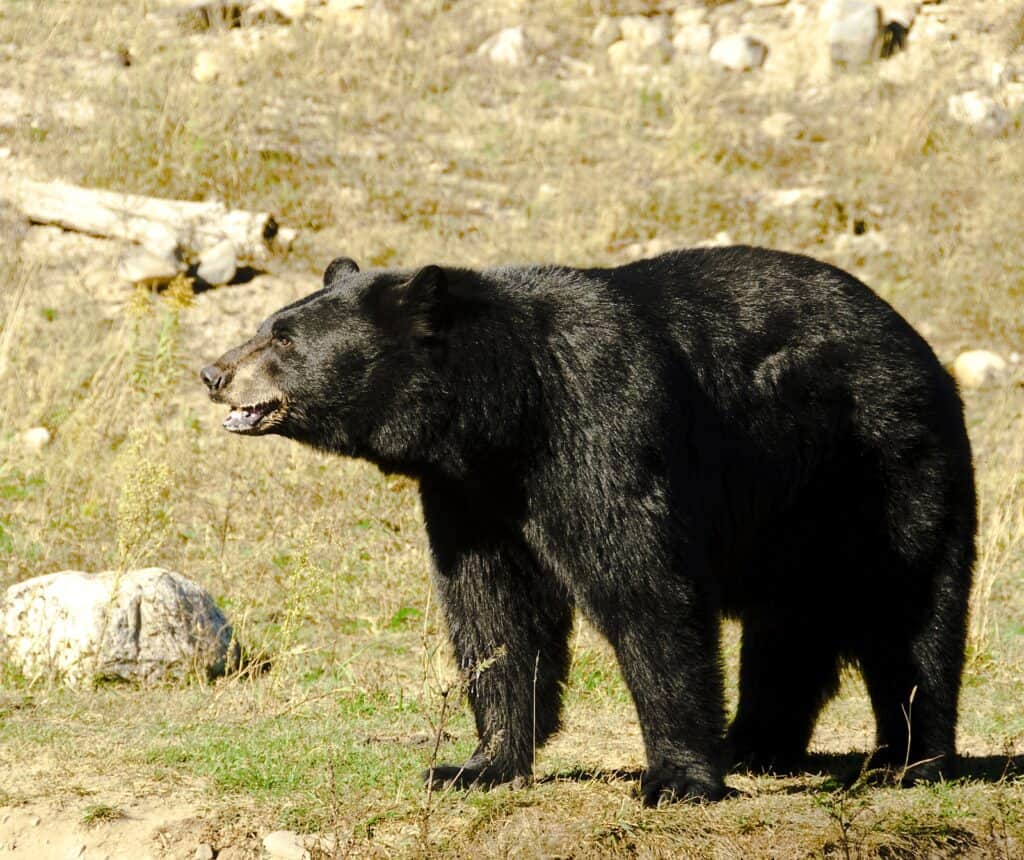
The American black bear (Ursus americanus) is by far the most common bear in Canada. It lives in forested areas in every province and territory except Prince Edward Island. Black bears are excellent climbers and often feed along roadsides in spring, which is when most visitors see their first bear. The Icefields Parkway between Lake Louise and Jasper is a classic place for this. Our Icefields Parkway guide explains where to stop.
Colour: despite the name, black bears come in black, brown, cinnamon, blond and even grey-blue. Many have a light patch on the chest. In the Rocky Mountain parks, a brown black bear is common, so colour alone will mislead you.
Weight: in the Rocky Mountain parks, males weigh 80 to 150 kg and females 45 to 100 kg, according to Parks Canada. In richer habitats further north and on the coast, large males can reach 250 kg.
Diet: black bears are omnivores. Most of their diet is plants: grasses, dandelions, horsetail and in late summer berries, especially buffaloberries in the Rockies. They also eat insects, carrion, newborn deer and elk calves, and salmon where rivers have them.
The Spirit Bear
On the north coast of British Columbia, in the Great Bear Rainforest, lives a rare form of the black bear with white or cream fur: the Kermode bear, also called the spirit bear. It is not an albino. A recessive gene causes the white coat, and both parents must carry it. The Kermode bear is the official mammal of British Columbia.
The Grizzly Bear
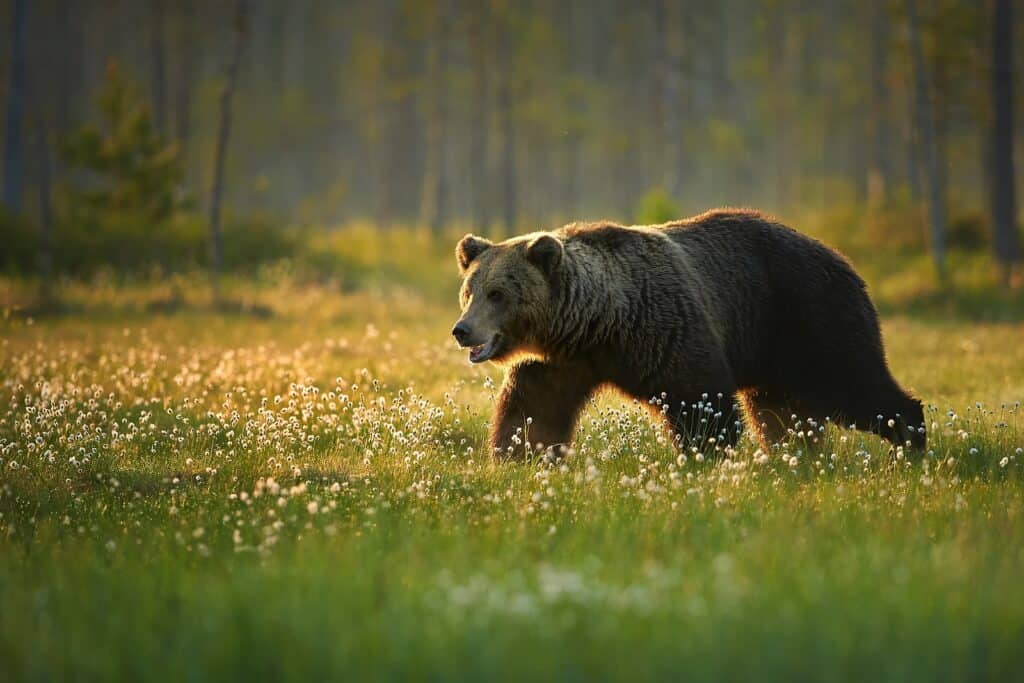
The grizzly is the North American form of the brown bear (Ursus arctos), the same species that lives in Europe and Asia. The name comes from the “grizzled” look of its fur: many grizzlies have light, frosted tips on darker hair.
In Canada, grizzlies live in British Columbia, western Alberta, the Yukon, the Northwest Territories and parts of Nunavut. They use open alpine meadows, avalanche slopes, river valleys and the tundra as well as forest.
Colour: from almost black through all shades of brown to light blond. As with black bears, colour is no reliable sign.
Weight: Parks Canada gives 150 to 300 kg for males and 80 to 150 kg for females in the Rocky Mountain parks. Interior and mountain grizzlies are smaller than coastal bears that feed on salmon. In the Northwest Territories, Parks Canada gives up to 360 kg for males. A female grizzly and a large male black bear can weigh the same, which is why size alone doesn’t help.
Diet: grizzlies eat roots, grasses, berries, insects, ground squirrels, carrion and, where available, salmon. They also prey on elk and moose calves in spring.
Winter: grizzlies and black bears both spend the winter in dens, usually from about November to April depending on the region and snow. Females give birth in the den in January or February.
Speed: grizzlies are much faster than they look and can easily outrun a person. Running away from a bear is never a good idea. Our article on bear safety in Canada explains what to do in an encounter.
Kodiak and Coastal Brown Bears
The largest brown bears live on the coast, where salmon is plentiful. The Kodiak bear on Kodiak Island in Alaska is the best-known example and one of the largest land predators in the world. In Canada, coastal grizzlies in BC’s Great Bear Rainforest and Khutzeymateen Valley are also larger than their relatives in the Rockies.
The Polar Bear
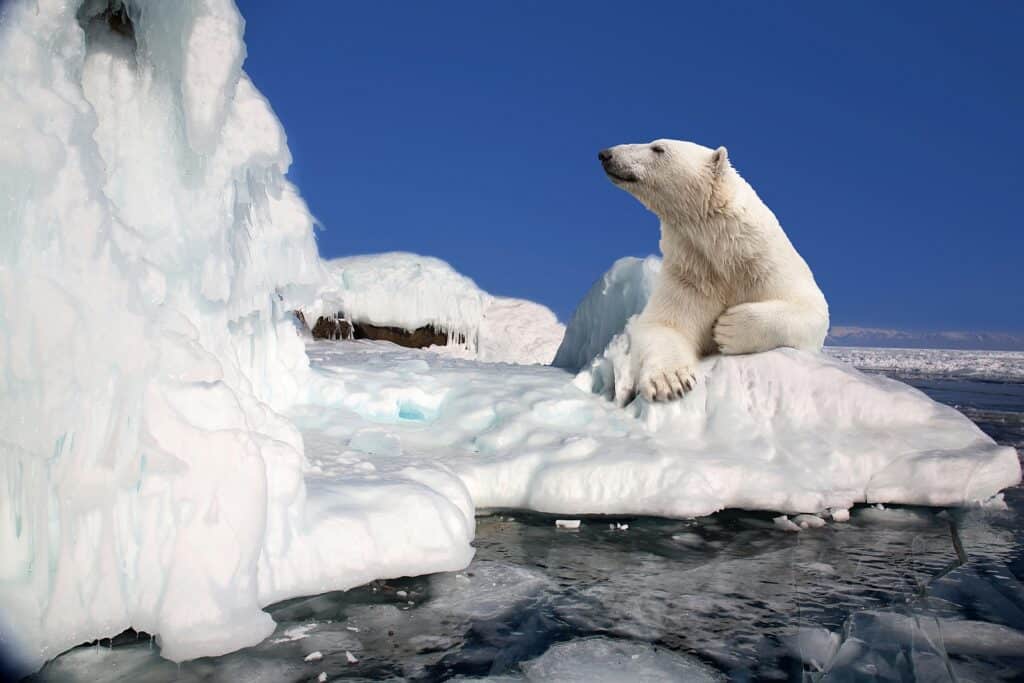
The polar bear (Ursus maritimus) is closely related to the brown bear but has adapted to life on the sea ice. About two thirds of the world’s polar bears live in Canada. You won’t confuse it with the other two species: no other bear has its long neck, narrow head and white to yellowish coat.
Colour: polar bear fur has no pigment. The hairs are translucent and look white. Natural oils and dirt can make the coat look yellow. Underneath, the skin is black.
Weight: in Wapusk National Park near Churchill, adult males usually weigh 300 to 450 kg and females 150 to 250 kg, according to Parks Canada. The heaviest bear recorded in the park weighed just over 700 kg. Front paws can measure up to 30 cm across and work like paddles in the water.
Diet: polar bears hunt mainly seals on the sea ice. On land in summer they eat little and live off their fat reserves until the ice returns.
Where to see them: Churchill, Manitoba, is the most accessible place in the world to see wild polar bears. The western Hudson Bay population, about 935 bears according to the Government of Manitoba, comes ashore when the ice breaks up in summer and waits on the coast until the bay freezes in November. From about late September to mid-November, many bears gather on the coast near Churchill. Viewing happens from licensed tour vehicles, and the province limits the number of operators and vehicles.
Polar bears are listed as a species of special concern under Canada’s Species at Risk Act and as threatened in Manitoba. The sea ice on Hudson Bay now breaks up about three weeks earlier than in historical records, which shortens the bears’ hunting season.
Unlike grizzlies and black bears, polar bears do not fear people and may see them as prey. Never walk around Churchill or other polar bear areas alone at night or outside town without a guide.
The Pizzly or Grolar Bear
Grizzlies and polar bears can mate, and their offspring are fertile. For a long time, these hybrids were only known from zoos. In April 2006, a hunter shot what he thought was a polar bear on Banks Island in the Northwest Territories. DNA tests showed it was a hybrid: half polar bear, half grizzly. The animal became known as a pizzly or grolar bear.
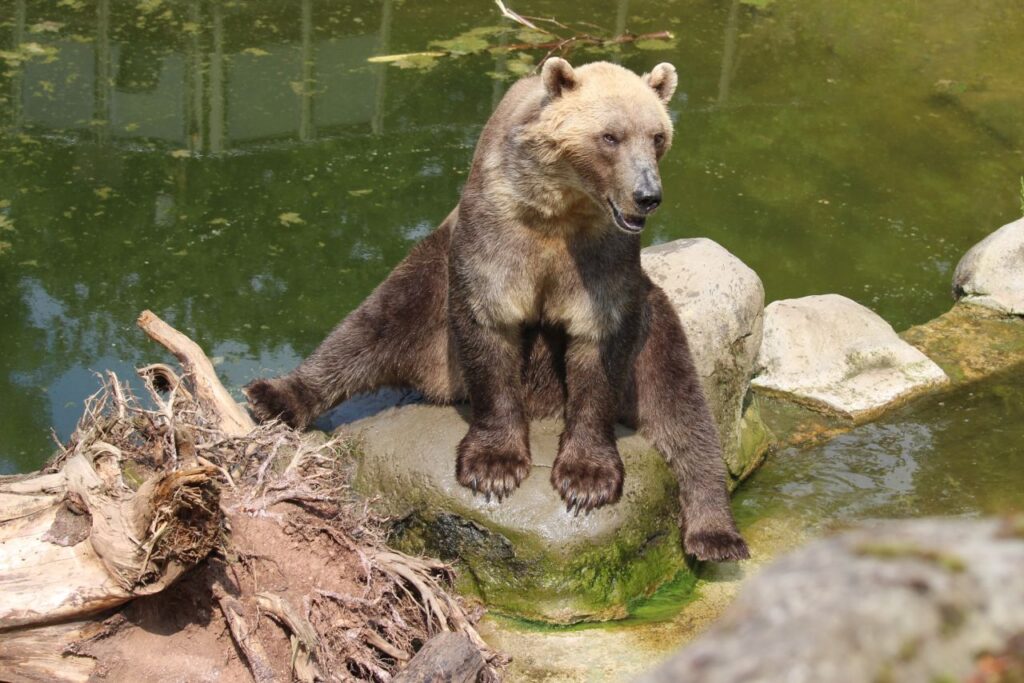
In the wild, hybrids are very rare. A genetic study published in 2024 in Conservation Genetics Resources looked at more than 800 polar bears and grizzlies from Canada, Alaska and Greenland. It found only eight hybrids, all descended from one female polar bear, and no new cases beyond those already known. The authors do not see hybridization as a threat to polar bears at present. They expect more hybrids in the future, because warming is pushing grizzlies north into polar bear range.
All wild hybrids found so far have a polar bear mother and a grizzly father. Researchers think this is because male grizzlies roam over large areas, while females stay closer to home.
Quick Comparison
| Black bear | Grizzly bear | Polar bear | |
|---|---|---|---|
| Where in Canada | Forests in every province and territory except PEI | BC, western Alberta, Yukon, NWT, Nunavut | Arctic coasts and sea ice, Hudson Bay |
| Typical male weight | 80 to 150 kg (Rockies) | 150 to 300 kg (Rockies) | 300 to 450 kg (Hudson Bay) |
| Hump | No | Yes | No |
| Face profile | Straight | Dished | Long, narrow, straight |
| Claws | Short, for climbing | Long, for digging | Short and thick, for gripping ice |
| Colour | Black, brown, cinnamon, blond, white (spirit bear) | Black to blond, often frosted tips | White to yellowish |
Frequently asked questions
Is every brown bear in Canada a grizzly?
No. Many black bears are brown or cinnamon. Check for the shoulder hump, the dished face, the short round ears and long claws before you call a bear a grizzly.
Where can I safely watch bears in Canada?
From your car along the Icefields Parkway and in Banff National Park in spring and early summer, on guided boat or viewing tours on the BC coast in late summer and fall, and from tour vehicles in Churchill for polar bears in October and November. Always keep at least 100 metres away from bears seen from the road.
Which bear is the most dangerous?
Any bear can be dangerous when it is surprised, defending cubs or protecting food. Grizzlies are more likely to defend themselves at close range. Polar bears are the most likely to treat people as prey. The right behaviour depends on the situation, not only on the species.
Do black bears and grizzlies live in the same areas?
Yes, in much of BC, western Alberta and the Yukon. In Banff, Jasper, Yoho and Kootenay national parks you can see both species, sometimes on the same day.
Comments
No comments yet. Questions about this article are welcome.
Thank you. Your comment will appear once we have checked it.