Wildlife & Nature
Bear Safety in Canada: What to Do in an Encounter
Parks Canada bear safety: avoiding encounters, defensive vs. non-defensive bears, how to use bear spray, what to do in an attack and how to store food.
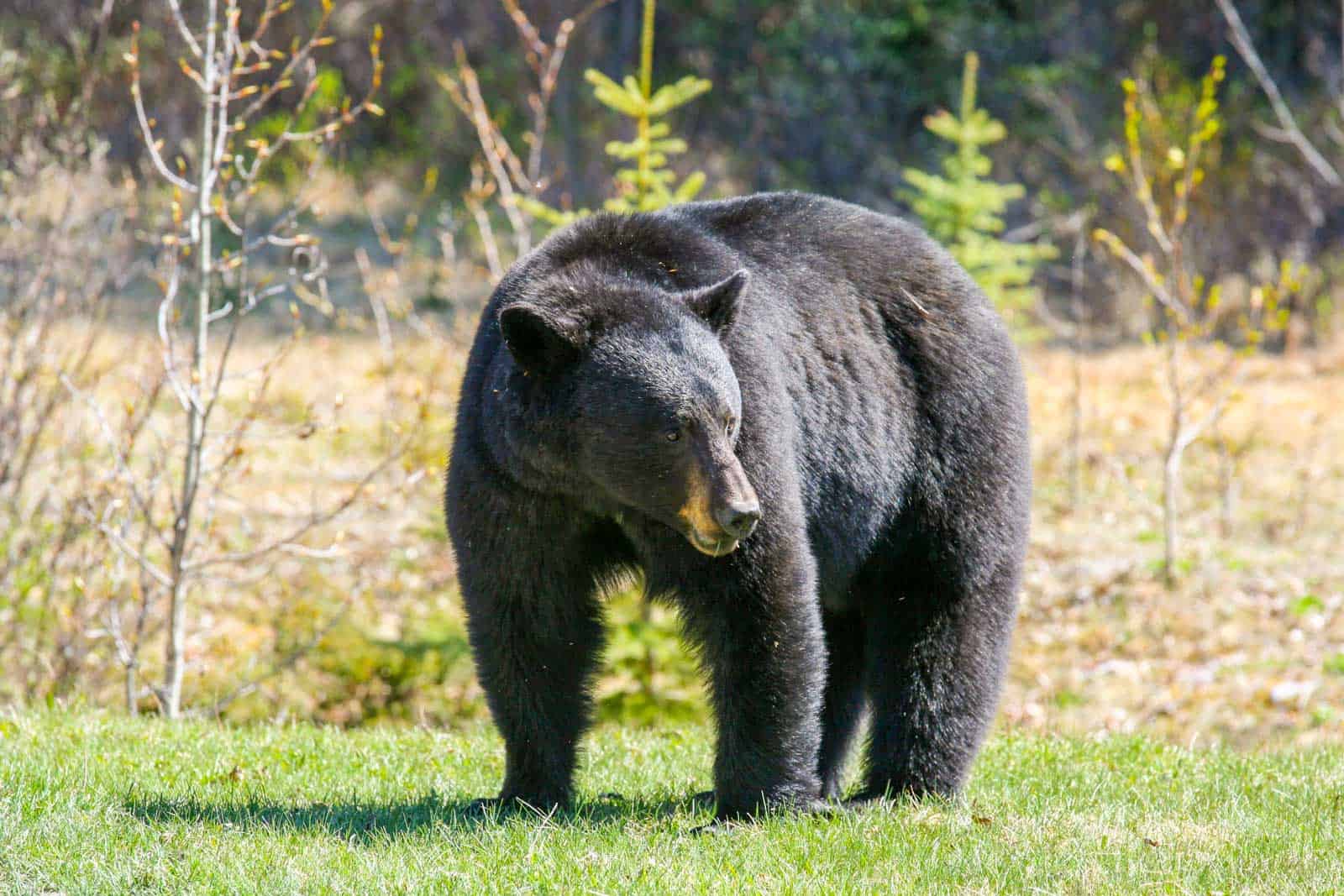
Most bears avoid people. If a bear hears you coming, it usually leaves long before you see it. Serious encounters are rare, and most of them end without injury. Still, if you hike, camp or fish in western Canada, you are in bear country, and knowing the right response can decide how an encounter ends.
This guide follows the advice of Parks Canada for the mountain national parks and the Yukon parks. Read the bear safety information of the park you visit as well, since some rules differ from park to park.
Avoid Surprising a Bear
Bears do not like surprises. Most dangerous situations happen when a person and a bear meet at close range without warning.
- Make noise. Call out, clap, sing or talk loudly, especially near streams, in dense brush, in berry patches, on windy days and wherever you can’t see far ahead. Parks Canada says bear bells are not effective. A bear busy eating may not notice them.
- Travel in groups. Parks Canada recommends groups of four or more who stay close together. Larger groups are louder and more intimidating to bears. Never let children run ahead.
- Hike in daylight and stay on marked trails. Bears are most active at dawn and dusk.
- Watch for fresh signs. Tracks, droppings, dug-up ground, torn-apart logs and overturned rocks. If the signs are fresh, leave the area.
- Stay away from carcasses. A bear may be feeding nearby and will defend its food. If you find a large dead animal, leave right away and report it to Parks Canada.
- Keep dogs on a leash at all times, or leave them at home. A loose dog can provoke a bear and lead it back to you.
- Cyclists and trail runners: slow down in shrubby areas and at blind corners, make noise and don’t wear earbuds.
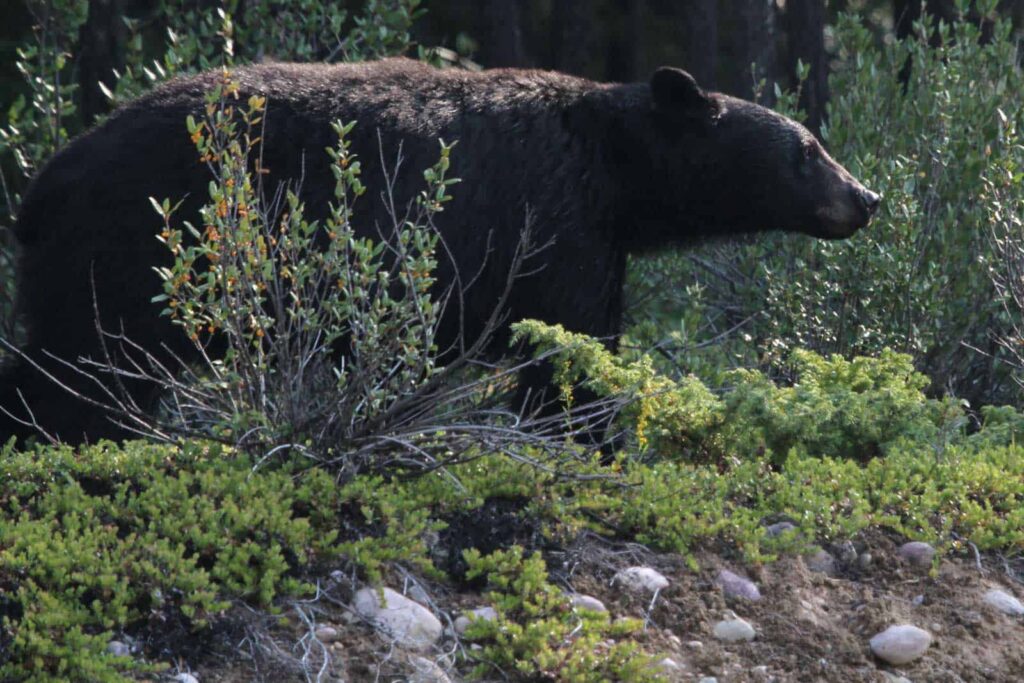
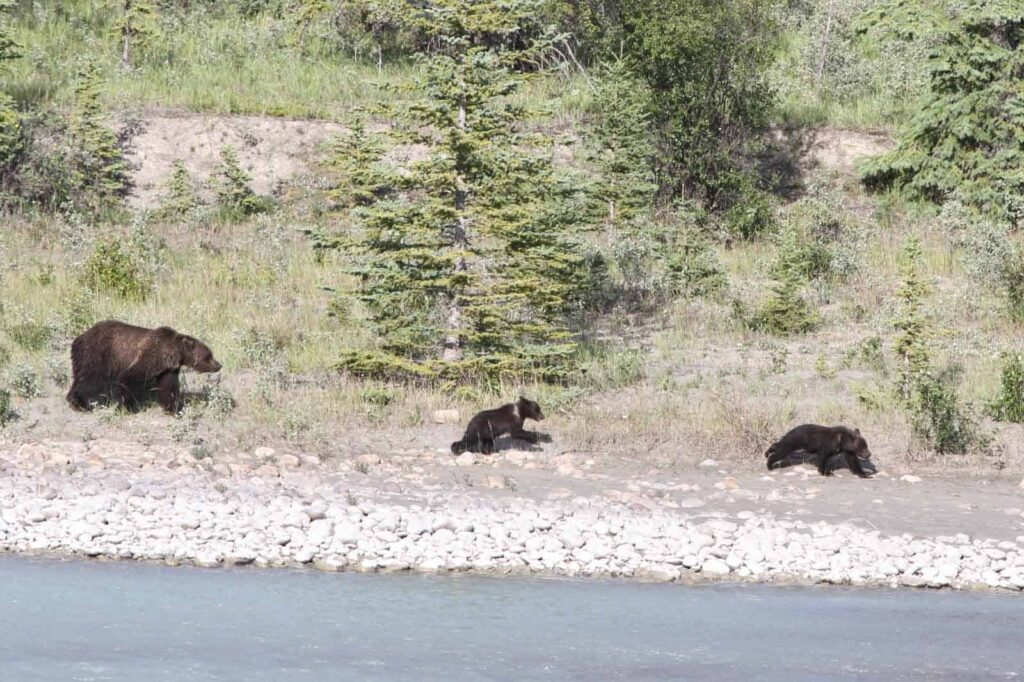
Bears like easy routes too, and you will often meet them on trails and roads. Any bear with cubs is a defensive bear waiting to happen. Never get between a mother and her cubs. If you see cubs, turn around and leave the way you came.
Bear Spray
Parks Canada asks everyone who hikes, bikes or camps in bear country to carry bear spray, keep it within reach and know how to use it.
- Carry it on a belt or chest holster, not inside your pack. You will have only a few seconds.
- Read the instructions on the can before your trip, including the range and how long it sprays. Practise taking off the safety clip.
- Use it when the bear is within range. Most manufacturers advise aiming slightly downward in front of the bear, so it runs into the cloud.
- Know its limits. Parks Canada says wind, distance, rain, freezing temperatures and an expired can all reduce its effect. Check the expiry date. In strong wind, the spray can blow back at you.
- Buy it in Canada. Bear spray is not allowed on commercial flights, either in carry-on or checked bags. Outdoor stores in Banff, Jasper, Canmore, Whitehorse and other gateway towns sell it, but it can be hard to find in small northern communities.
Bear spray is a last line of defence. Avoiding the encounter remains the best protection. Firearms are not permitted in Canada’s national parks.
If You See a Bear
- Stop, stay calm and do not run. Running can trigger a chase, and a bear can easily outrun you.
- Get your bear spray ready.
- If the bear has not noticed you, move away quietly the way you came.
- If the bear has noticed you, speak to it in a calm, firm voice so it knows you are a human. A bear standing on its hind legs and swinging its nose is trying to identify you. This is curiosity, not aggression.
- Back away slowly. Do not turn your back and run.
- Look larger. Pick up small children, stay together as a group and keep your pack on, since it can protect your back.
- If you need to continue, make a wide detour, or wait at a safe distance until the bear has moved on.
Warning signs that a bear is stressed include woofing, growling, snapping its jaws and laying its ears back. It may also bluff charge: run at you and stop or veer off at the last moment. Stand still and keep talking calmly. Screams and sudden movements can turn a bluff into an attack.
Defensive or Non-Defensive: Read the Bear
When a bear comes towards you, Parks Canada asks you to decide which kind of bear you are dealing with. The right response is the opposite in each case.
Defensive bear
A defensive bear feels threatened: you surprised it, it is protecting cubs, or it is guarding food. It looks stressed or agitated and often vocalizes.
- Appear non-threatening and talk calmly.
- When it stops advancing, slowly move away.
- If it keeps coming, stand your ground, keep talking and use your bear spray when it is in range.
- If it makes contact, fall to the ground and play dead.
Non-defensive bear
A non-defensive bear is curious, wants your food, is testing its dominance or, in rare cases, sees you as prey. Its head and ears are up and it is focused on you.
- Speak firmly and move out of its path.
- If it follows, stop and stand your ground.
- Shout, act aggressively and try to intimidate it. Make yourself look bigger and move uphill if you can.
- If it comes close, use your bear spray.
If a Bear Attacks
Defensive attack: play dead
Defensive attacks are the most common type. If the bear makes contact after you have used your spray:
- Lie flat on your stomach with your legs apart, so the bear can’t roll you over easily.
- Clasp your hands behind your neck to protect your face, head and neck.
- Keep your pack on.
- Stay still and silent until you are sure the bear has left. If you move too early, it may return.
Parks Canada notes that defensive attacks usually last less than two minutes. If the attack goes on longer, it may have become predatory. Then fight back.
Predatory attack: fight back
Predatory attacks are rare. Signs are a bear that stalks or follows you along a trail, or a bear that attacks at night, for example in your tent.
- Try to escape into a building, a vehicle or up a tree. Remember that black bears climb very well.
- If you cannot escape, do not play dead. Use your bear spray and fight back with everything you have. Shout and hit the bear with branches, rocks or your hiking poles. Aim at its face and nose.
Camping and Food Storage
Bears that get human food once come back for more. A bear that loses its fear of people often has to be relocated or killed. Your food storage protects you, the next campers and the bear.
At campgrounds:
- Keep your site clean. Store all food, coolers, cooking gear, pet food, garbage and anything with a scent, such as toothpaste and sunscreen, in your hard-sided vehicle or in the food lockers provided. Never leave food on a picnic table, even for a few minutes.
- Never keep food or scented items in a tent or tent trailer.
- Wash dishes right after eating. Strain food scraps out of the dishwater and put them in the garbage. Dump dishwater only where it is permitted.
- Use the bear-proof garbage bins.
In the backcountry:
- Camp only at designated sites where required, and use the food lockers or food hanging poles.
- Where random camping is allowed, pitch your tent at least 50 metres from trails, thick brush and berry patches and at least 70 metres from water. Cook, eat and store food at least 50 metres downwind of your tent.
- In Banff, Yoho, Kootenay and Jasper national parks, approved bear-resistant food containers are mandatory from April 1 to November 15 where random camping is permitted.
- Pack out all garbage. Do not burn it, bury it or throw it in pit toilets. Bears smell buried food easily.
- Change out of the clothes you cooked in before going to bed.
If you fish: clean fish away from camp. Parks Canada asks you to dispose of fish guts in fast-moving water or in deep water of a lake, never on the shore. If a bear approaches while you are fishing, stop and move away. A bear that learns to take fish from anglers will come back.
Bears by the Road
Most visitors see bears from the road, often black bears feeding on dandelions along the Icefields Parkway or the Bow Valley Parkway in Banff National Park.
- Slow down. Parks Canada encourages you to keep driving rather than stop.
- If you stop, pull over only where it is safe, turn on your hazard lights and stay in your vehicle.
- Stay at least 100 metres away. Take a quick photo and move on. Do not stay if traffic backs up.
- Never feed a bear or leave food out for it.
Use a camera with a long telephoto lens, so you aren’t tempted to get closer. Our Icefields Parkway guide lists the best stops on this route.
Bear Safety at a Glance
- Make noise, travel in groups, hike in daylight.
- Carry bear spray in reach and know how to use it.
- Never run from a bear.
- Defensive bear: stay calm, back away, play dead if it makes contact.
- Non-defensive or predatory bear: stand your ground, intimidate, fight back.
- Store all food and scented items properly.
Treat bears with respect and keep your distance, and you can watch them in the wild with very little risk. Our guide to black bears, grizzlies and polar bears helps you identify the bear you see.
Frequently asked questions
Should I play dead or fight back?
It depends on the bear’s behaviour, not only on the species. Play dead if a defensive bear (surprised, with cubs or guarding food) makes contact. Fight back if the attack is predatory: the bear stalked you, attacked at night or keeps attacking after you have played dead for about two minutes.
Do bear bells work?
Parks Canada says bear bells are not effective. Use your voice instead: call out, clap and talk loudly, especially where you can’t see far ahead or near loud streams.
Can I bring bear spray on a plane to Canada?
No. Bear spray is prohibited on commercial flights. Buy it after you arrive at an outdoor store in a gateway town, and check the expiry date.
What should I do if a bear comes to my campsite?
Get into your vehicle or a building if you can. If not, stand your ground, shout and act aggressively, and use bear spray if it comes close. Report the bear to park staff or the campground host right away.
Comments
No comments yet. Questions about this article are welcome.
Thank you. Your comment will appear once we have checked it.